Emergency Chimney Sweep Near Me: What East Los Angeles Homeowners Should Do First
If you suspect a chimney fire or a flue breach, stop reading search results and start the containment sequence: close the damper, close the glass doors or fire screen, get everyone out of the room, and call 911 before you call any chimney company. That order matters, and it matters in the first 20 minutes. A chimney fire sounds like a low roar, a rumble you can feel through the hearth, or even a freight train inside the wall. Homeowners who don’t recognize the sound often add another log thinking the fire died down. That’s how a contained flue fire becomes a structure fire. So let’s walk through exactly what East Los Angeles homeowners need to know, and what comes after the fire department leaves.
If you’d rather skip the preamble and talk to a sweep directly, call us at (855) 554-2841. We’ll tell you over the phone whether what you’re seeing warrants an immediate visit, and what you should do while you wait.
The First 20 Minutes: A Protocol That Saves Houses
Here in East Los Angeles, we respond to chimney emergencies in neighborhoods from Boyle Heights to El Sereno, and the ones that end well all follow the same script. The ones that don’t are usually the result of someone doing the right thing in the wrong order. So let’s put this in order.
- Close the damper. A chimney fire consumes oxygen. Cutting off its air supply is the single most effective thing you can do before responders arrive. If you have glass doors on the fireplace, close them. If you have a freestanding wood stove, close all air intakes.
- Do not add water. Throwing water into a burning firebox can crack the firebrick and, in a flue fire, generate a steam blast that spreads burning creosote. This is the second most common mistake we see documented in fire reports from East LA house calls.
- Evacuate the room. Close doors behind you to limit oxygen flow. This includes pets. We love dogs. Dogs do not help with chimney fires.
- Call 911. Not your sweep, not your landlord, not your neighbor who used to work construction. The fire department’s job is to make sure the fire didn’t extend into the attic or chase. Once they clear the scene, that’s when you call a chimney professional.
Why does the order matter? Because a surprising number of East Los Angeles homeowners call a sweep first, get routed through a phone tree, and spend four minutes on hold while the fire climbs the chase. The fire department is trained for this exact scenario. We’re trained to clean up after them, inspect the damage, and tell you whether the chimney is safe to use again. Those are two different jobs, and they happen in sequence.
Smoke in the House: Draft Issue or Flue Fire?
Not every emergency is a fire. Sometimes smoke rolls into the living room because of a downdraft, a cold flue, or a negative-pressure problem created by a running bathroom fan or range hood. Here’s how we teach East Los Angeles homeowners to tell the difference, because the wrong diagnosis leads to either a false alarm or a dangerous false “all clear.”
A draft or negative-pressure issue usually smells woody and familiar. It’s the same smell as the fire itself, just in the wrong room. Open a window near the fireplace. If the smoke starts drawing up the flue and clears within a few minutes, you’re likely dealing with a draft problem, not a fire. You still want a sweep to look at it, but it’s not a 911 situation. Cold flues are common in East LA winter mornings, especially in older homes along Whittier Boulevard where chimneys are exterior masonry and haven’t been used in months.
A flue fire or liner breach smells different. It’s acrid, sharp, almost chemical. It doesn’t clear when you open a window. You may see black flakes or chunks of creosote falling into the firebox, or hear that low roar we mentioned. If any of those signs are present, you’re not dealing with a draft. You’re dealing with combustion inside the flue or a breach that’s letting smoke and heat into the wall cavity. Close the damper, evacuate, call 911.
After the fire department clears the scene, the next step is a camera inspection. Not a visual once-over. A legitimate emergency sweep in East Los Angeles includes a camera pass and a written unsafe-to-use determination, not a flashlight peek and a cheerfully worded “all good.” If a company offers same-day emergency service but doesn’t run a camera, you’ve hired a soot-removal laborer, not an inspection professional.
Post-Earthquake Lockout: The 4.0 Rule
East Los Angeles sits on some of the most heavily studied ground in the LA basin, wedged between the Whittier Fault and the Puente Hills Thrust. Earthquakes are a structural test for masonry chimneys, and not all damage is visible from the ground. That’s why we tell homeowners to adopt a simple rule: any earthquake above magnitude 4.0 in the LA basin means a Level 2 inspection before the next fire.
You can check exactly what your address experienced using the USGS ShakeMap tool. Type in your address and it’ll show you the peak ground acceleration at your location, not just the epicenter. A 4.8 centered in El Monte can shake a house near East LA College harder than a 5.2 out in the desert. The magnitude number on the news is less useful than the ground motion at your foundation.
What does a Level 2 inspection involve? A camera run through the full flue length, an examination of the chimney crown and cap, a check for cracks in the firebrick, and documentation of any separation between the flue tiles and the surrounding masonry. It takes about an hour. It costs less than losing the chimney in a fire, and it’s the same inspection we perform after any suspected flue fire in East Los Angeles, whether the fireplace is in a 1920s bungalow in City Terrace or a mid-century ranch in Monterey Park-adjacent streets.
Here’s the thing about earthquake damage to masonry chimneys: the cracks rarely announce themselves. You’ll light the first fire of November, heat will find the gap, and that gap becomes a channel into the chase. We’ve seen chimneys that looked fine from the ground and were structurally unsafe 12 feet up. The camera doesn’t lie.
What “Emergency Sweep” Actually Means
Let’s define the scope, because a lot of companies in the East Los Angeles area use “emergency sweep” to mean “we’ll come out on a Sunday.” What a real emergency response involves is a specific set of procedures:
- Camera inspection of the full flue. Every lateral foot of it. If damage is found, you get photos you can see yourself.
- Written unsafe-to-use determination. If the chimney is hazardous, we put it in writing. Documented, dated, and specific about what failed. This matters for insurance claims after chimney fires, which are more common in East LA than most neighborhoods because of the housing stock’s age and the density of wood-burning fireplaces.
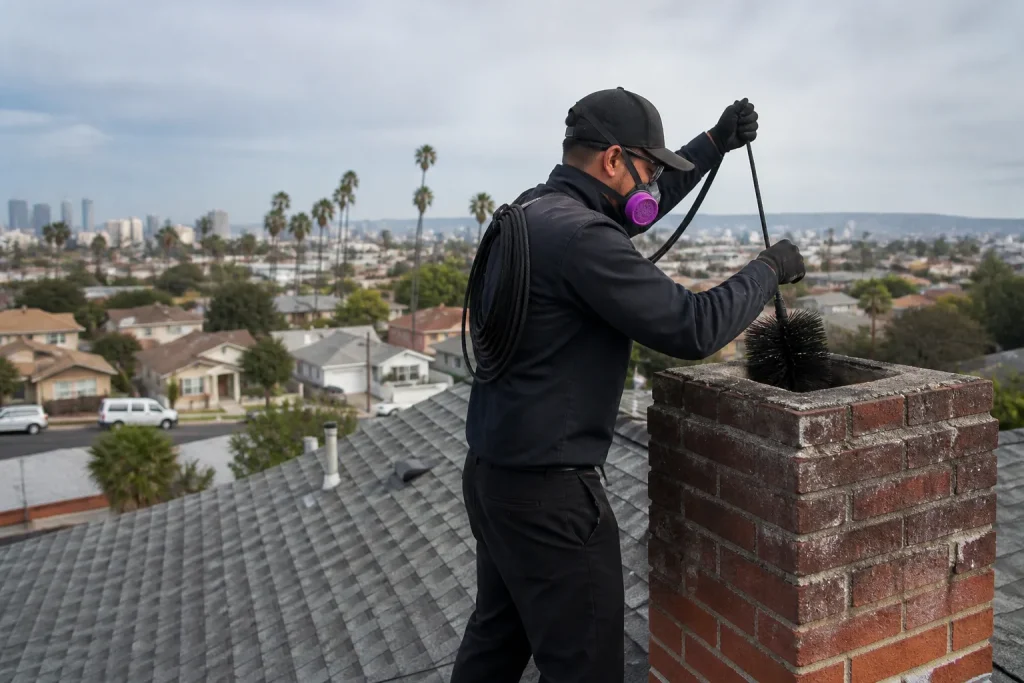
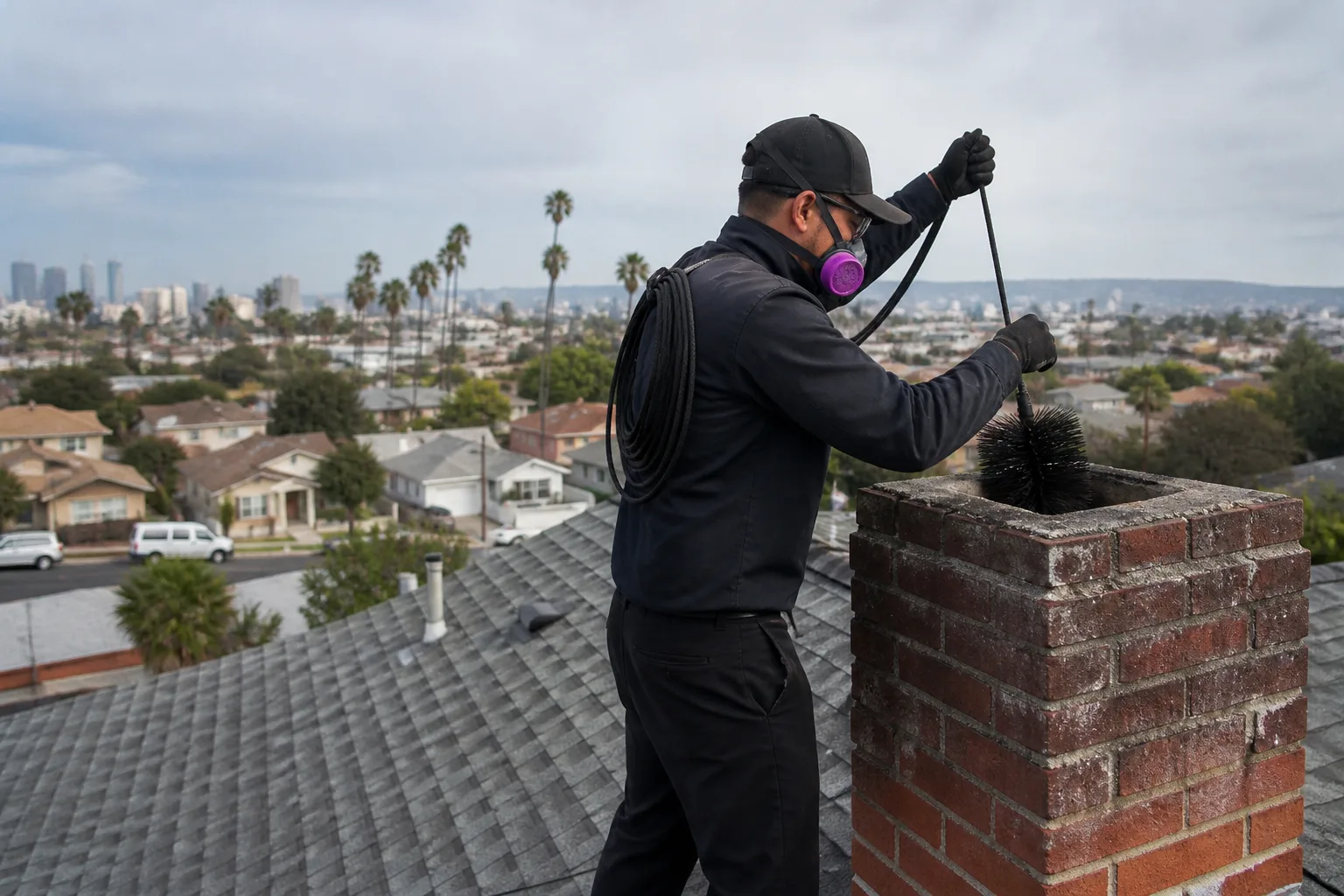
- Removal of immediate hazards. This might mean mechanical removal of glazed creosote, clearing a partial blockage, or securing a damaged cap so it stops shedding debris into the flue.
- Repair options, not just a referral note. This is where Hickory Chimney Sweep differs from the single-service sweeps. When we find a damaged flue liner during an emergency call, we can discuss HeatShield resurfacing or a DuraFlex flexible liner system as a same-visit or rapid-follow-up repair. We stock and install these materials. We don’t hand you a phone number for another contractor.
If a sweep company can’t tell you what materials they carry for liner repair, they’re a cleaning crew. That’s fine for routine maintenance, but it’s not an emergency response. An emergency is by definition a moment when something is wrong. You need answers, not a referral.
Vetting a Same-Day Sweep Company Under Pressure
When your chimney’s smoking or you’ve had a fire scare, the pressure to book the first available appointment is real. But the companies that show up fast in East Los Angeles aren’t always the ones you want inside your home. Here are the two questions that separate a legitimate technician from an opportunist.
Question one: “What’s your contractor’s license number?” In California, chimney sweeps who perform repairs must hold a contractor’s license. Check it on the Contractors State License Board website. If they hesitate, if they say it’s “being renewed,” if they tell you licensing is a formality, hang up. A company that can’t produce a verifiable license number is not a company you want performing fire-safety work in your home.
Question two: “Do you carry liner materials on the truck?” This separates inspectors from problem-solvers. We carry DuraFlex flexible liner components and HeatShield resurfacing materials because emergency calls in East Los Angeles frequently lead to repair decisions on the spot. A company that only carries brushes and a vacuum can clean your flue but cannot fix what’s broken. If you’ve just had a flue fire, what you need is a company that can do both.
Beyond those two questions, trust your gut. An emergency visit should never feel like a sales pitch. It should feel like a diagnostic. We’ve done emergency calls in East LA where the right answer was “your chimney is fine, here’s the camera footage, you had a draft problem and a cracked damper plate.” We’ve done others where the right answer was “you cannot use this fireplace again until we reline it.” Both are useful. Only one makes us money, and we’ll never push you toward the expensive answer without camera evidence you can see for yourself.
When to call a pro: if you’re on the fence, call. If you’ve heard a roar from the flue, seen black flakes falling, or smelled that acrid smoke that won’t clear, call. If you had a 4.0-plus earthquake and haven’t had a Level 2 inspection, call before next winter. And if you’re just not sure, call anyway. The consultation costs less than getting it wrong.
Related services in East Los Angeles: Hickory Chimney Sweep home covers everything from emergency inspection to full-service repair across the Eastside. If you’re south of us, our Chimney Sweep in South San Gabriel page details standard service, and Chimney Repair in South San Gabriel covers liner replacement and masonry work. We also handle Dryer Vent Cleaning in South San Gabriel, because chimneys aren’t the only appliance-related fire hazard in the house.
The Bottom Line
A chimney emergency in East Los Angeles is a sequence problem. First, contain it: close the damper, close the doors, evacuate, call 911. Second, diagnose it: draft issue or flue fire, and if you’re not sure, err toward caution. Third, inspect it properly: camera footage, written determination, and a plan for repair if something’s failed. And fourth, remember that the cheapest quote on a same-day emergency call is often the most expensive mistake you’ll make all year. You’re not buying a cleaning. You’re buying documentation that your house is fire-safe.
If you’re in East Los Angeles and need help, Hickory Chimney Sweep offers free estimates. Call (855) 554-2841 and we’ll walk you through what you’re seeing, what it means, and what to do next.
Frequently Asked Questions
A chimney fire usually produces a low roar or rumble from the flue, often described as sounding like a freight train or a jet engine. You may also see black flakes of creosote falling into the firebox, dense dark smoke from the chimney cap, or feel heat radiating from the chimney chase. If you suspect a flue fire, close the damper, evacuate the room, and call 911. Then call a chimney professional after the fire department clears the scene.
No. Water can crack firebrick, damage the damper, and create a steam blast that spreads burning creosote through the flue. The correct response is to close the damper and any air intakes, evacuate, and let the fire department handle it. After the fire is out, schedule a camera inspection before using the chimney again.
At minimum once per burning season, which in East LA typically runs from November through March. If you burn more than three cords a year, or if you burn mostly soft woods like pine, you may need a mid-season sweep. Creosote buildup is the primary fuel for chimney fires, and it accumulates faster in the mild, damp winter conditions we get here than in colder, drier climates where fires burn hotter and cleaner.
It varies by company and by what’s found, but expect to pay a base dispatch fee plus the inspection rate in the East Los Angeles market, typically $150 to $350 for a same-day camera-pass emergency visit. If repairs are needed, those are quoted separately. Never accept an emergency “clean bill of health” that doesn’t include camera footage you’ve actually seen. Call (855) 554-2841 for a free estimate so you know the numbers before you commit.
Written by the team at Hickory Chimney Sweep, serving East Los Angeles since 2013.
Need Chimney Cleaning Help?
Call Hickory Chimney Sweep — licensed & insured, here with fast after-hours help in East Los Angeles.
(855) 554-2841