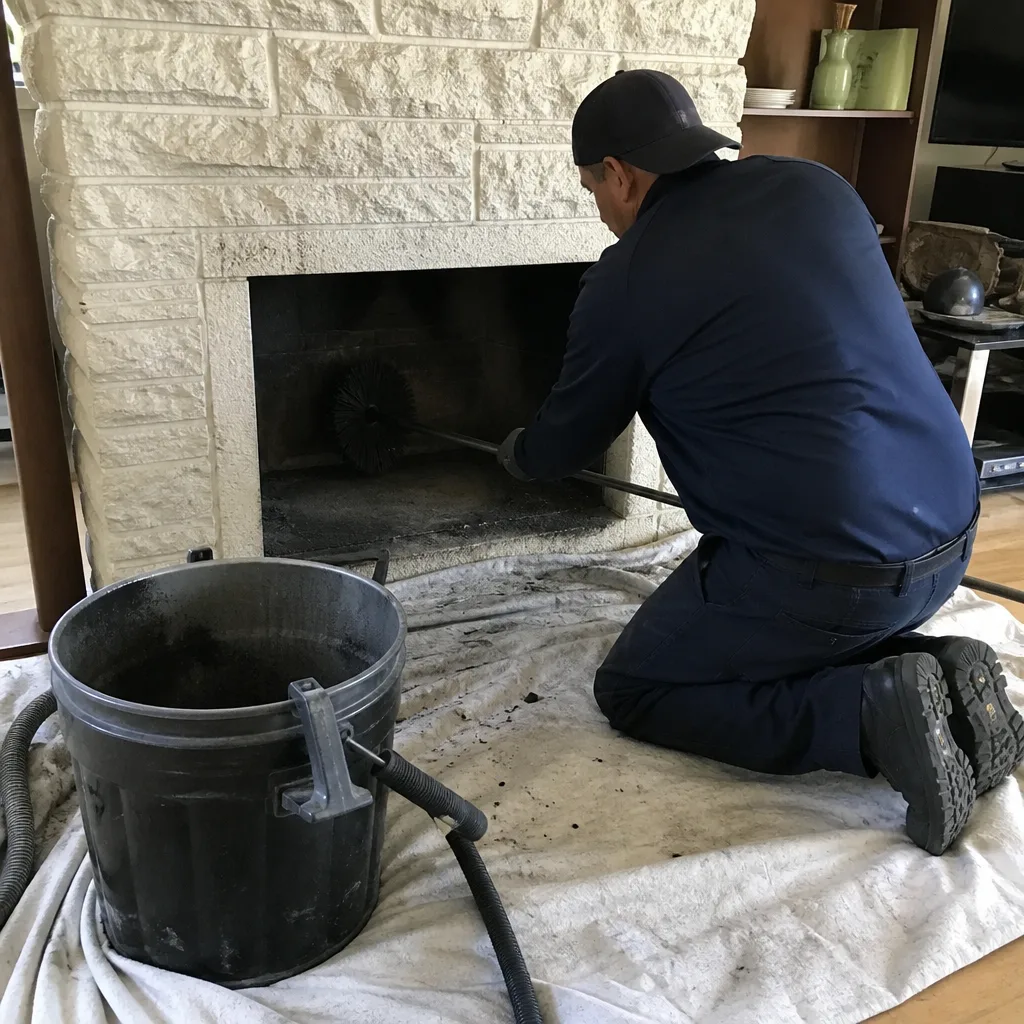

 Sweep & inspection
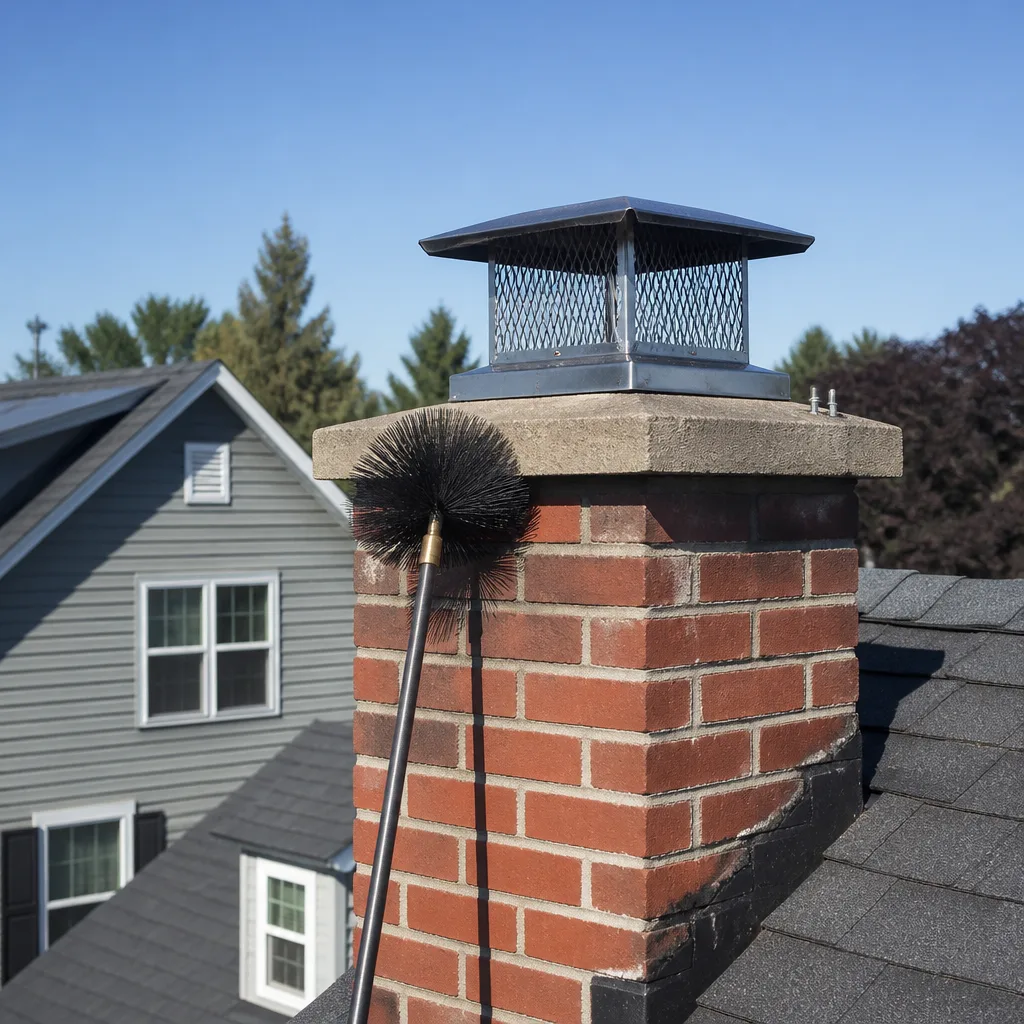
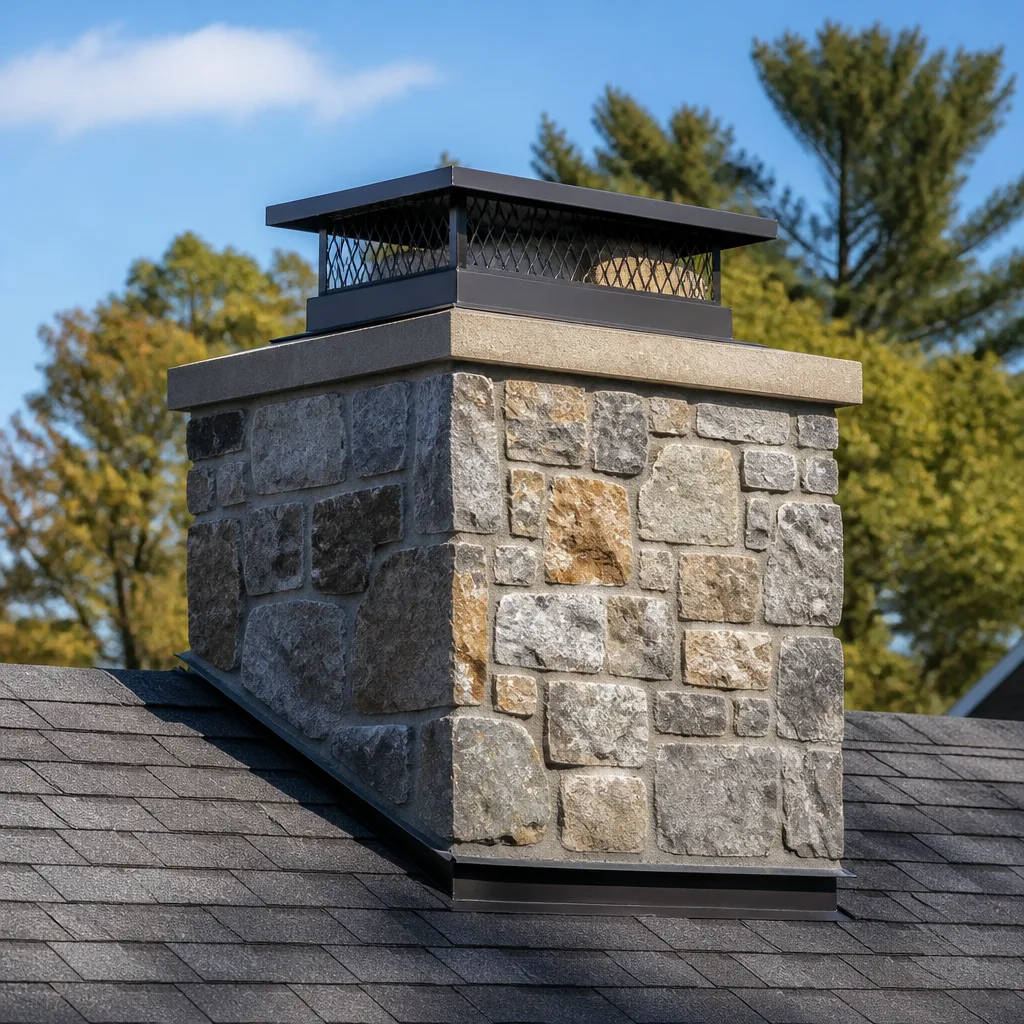 Caps & crowns
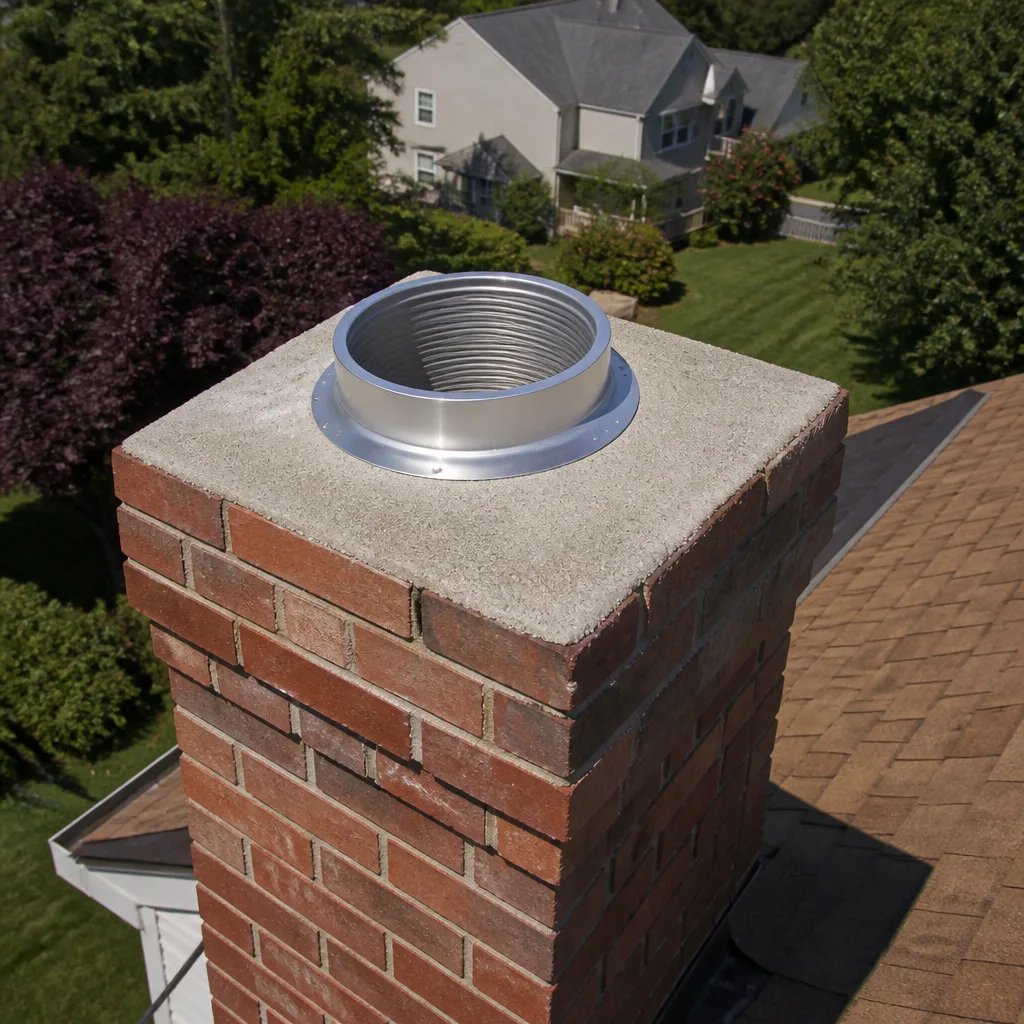 Flue relining
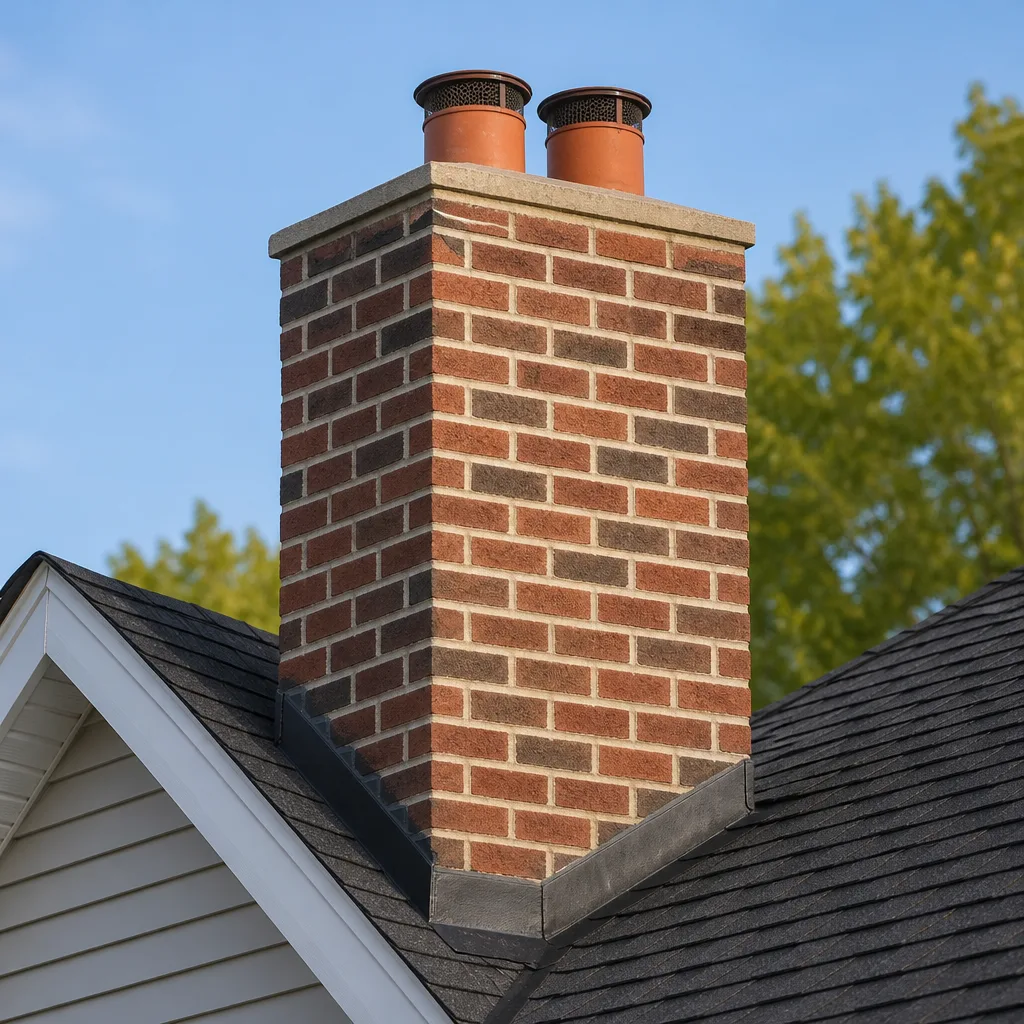 Masonry repair
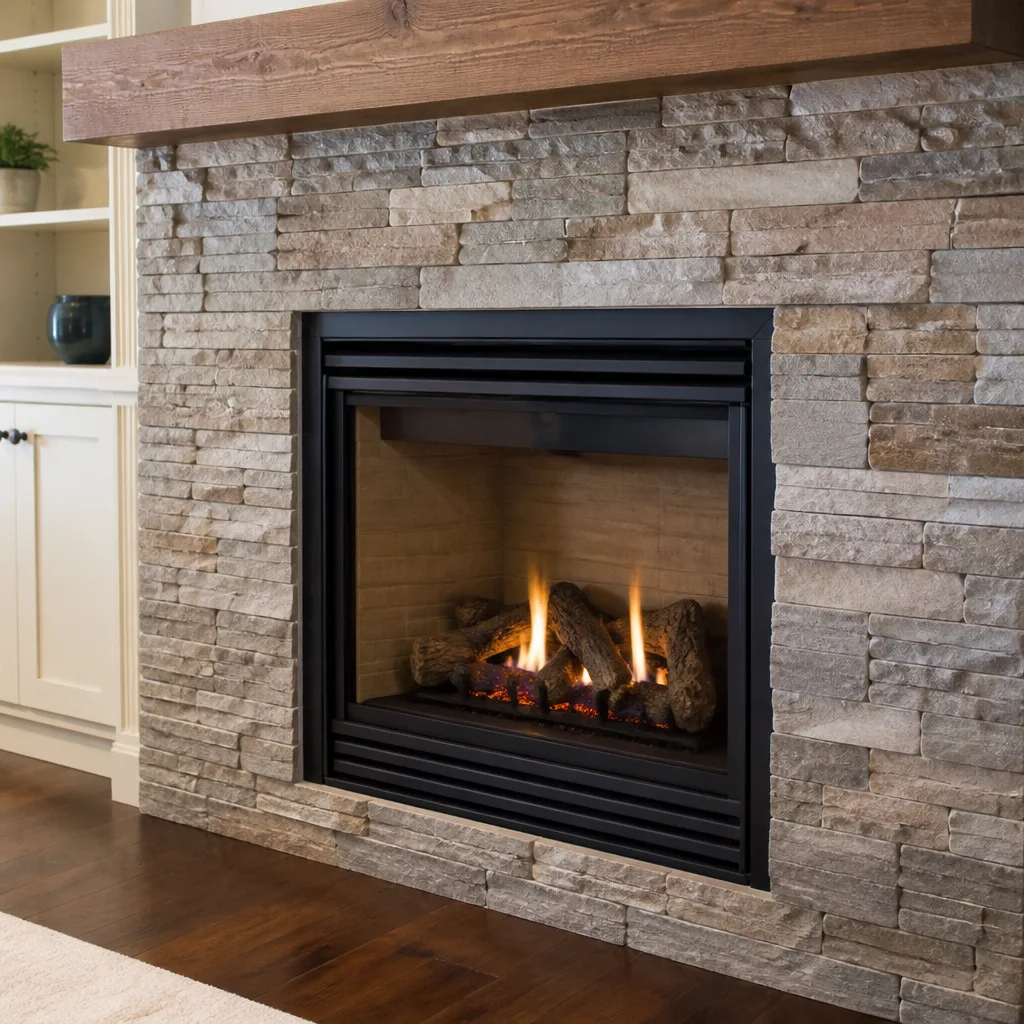 Gas fireplace service
Level 1 sweep and inspection to the NFPA 211 annual standard - flue, crown, cap, and flashing checked and photographed
Chimney sweep logs do not sweep chimneys. They loosen some creosote - which then falls where a brush and vacuum still have to collect it.
Fast, Reliable Chimney Sweep Across Covina
A chimney sweep in Covina usually costs between $169 and $289 for a standard open-hearth fireplace cleaning, and most appointments are completed in under two hours. If your chimney has been sitting idle through the San Gabriel Valley’s long hot stretch, that first fire of the season can smoke the living room fast. We work across Covina’s 91722, 91723, and 91724 zip codes and know exactly what those dormant flues collect during the off-season.
Hickory Chimney Sweep serves Covina homeowners directly. We’re not a franchise crew passing through. Our techs run these streets weekly and understand how the city’s mid-century tract stock and citrus-era homes near downtown actually behave when cold weather rolls in. If your fireplace is smoking, leaking, or just hasn’t been looked at in years, call Ruben Acosta and the team at (855) 554-2841 for a straight answer and a free estimate.
Why Hickory Chimney Sweep Is Covina’s Preferred Chimney Sweep Company
Covina’s housing is dominated by 1950s through 1970s single-story stucco tract homes with original brick or cinderblock open-hearth fireplaces and clay-tile flues, especially in the neighborhoods off Badillo Street and Citrus Avenue. Those fireplaces weren’t built for modern efficiency. They were built for a fire on a cool night, and decades of intermittent use leave creosote, soot, and debris layered inside the flue.
Our Chimney Sweep team works that housing stock every week. We know what a 1962 cinderblock firebox looks like inside. We know how clay-tile liners crack in Covina’s dry heat. And we know the shared-stack problem that comes with attached homes near downtown.
Ruben Acosta leads every job with a simple rule: show the homeowner what we found, explain what it means, and fix it before leaving if it’s in scope. That’s why Covina homeowners keep calling us back. Not because we’re the cheapest. Because we tell the truth and carry the parts to back it up.
Styles & brands we work with
Chimney Cleaning in Covina
Chimney cleaning in Covina typically runs $169 to $289 for a standard open-hearth fireplace, and that price includes full flue brushing from the firebox to the cap, the smoke chamber, and the damper assembly. Most Covina homes need this annually if they burn wood even occasionally. Homes that sit dormant all summer and only fire up around Thanksgiving and Christmas still need it because the long idle stretch is exactly when birds, palm fronds, and leaf litter find their way down the stack.
Creosote and Soot Removal
Creosote builds up in Covina fireplaces even with light seasonal use, and the type matters. First-degree creosote is soft, flaky soot that brushes out fairly easily. Third-degree creosote is a hard, shiny glaze that needs more aggressive mechanical removal. If yours has reached that stage, we’ll tell you straight and get it done.
Full Flue Brushing and Smoke Chamber Service
The flue gets brushed top to bottom with a properly sized rod system tied to the liner dimensions, not whatever brush is handy. Covina’s clay-tile liners were built in different eras and sizes, and forcing the wrong size through just pushes debris around. We also clean the smoke chamber above the damper, which is where a lot of Covina chimneys hold creosote that keeps smoldering after the fire’s out.
Fireplace Cleaning in Covina
Fireplace cleaning in Covina covers the visible firebox, the hearth, the damper, and the surrounding masonry face, and it should always happen with a chimney cleaning, not instead of it. A clean firebox with a dirty flue is still a fire hazard. We charge $169 to $289 for the complete job, and we treat the fireplace itself as part of the flue system, not a separate add-on.
Firebox and Hearth Service
We remove ash, old embers, and debris from the firebox floor and walls, then check the firebrick for spalling and cracks. Covina’s original cinderblock open hearths hold up reasonably well, but decades of heating and cooling in the dry climate can loosen mortar joints. We check the hearth extension too. That’s the part most sweeps skip.
Damper and Draft Verification
After cleaning, we open and close the damper to confirm it seats and seals properly, then run a draft test to make sure smoke moves up the flue rather than rolling back into the room. On Covina’s attached homes with shared masonry stacks, we verify draft on each firebox separately. That draft check has caught more than a few backdraft problems before they turned into a smoky Christmas morning.
Trusted Brands We Service in Covina
When a Covina chimney needs more than cleaning, we don’t hand you a phone number for someone else. We carry and install professional-grade materials from the same suppliers certified contractors specify. That includes DuraFlex flexible liner systems for full relining, HeatShield resurfacing compound for deteriorating clay-tile flue walls, and Olympia Chimney caps and terminations for exterior protection. We keep common cap and connector sizes stocked for Covina’s typical 1950s-70s masonry configurations, which means less waiting when your cap got dented by a palm frond or a Santa Ana gust took it clean off.
See the difference
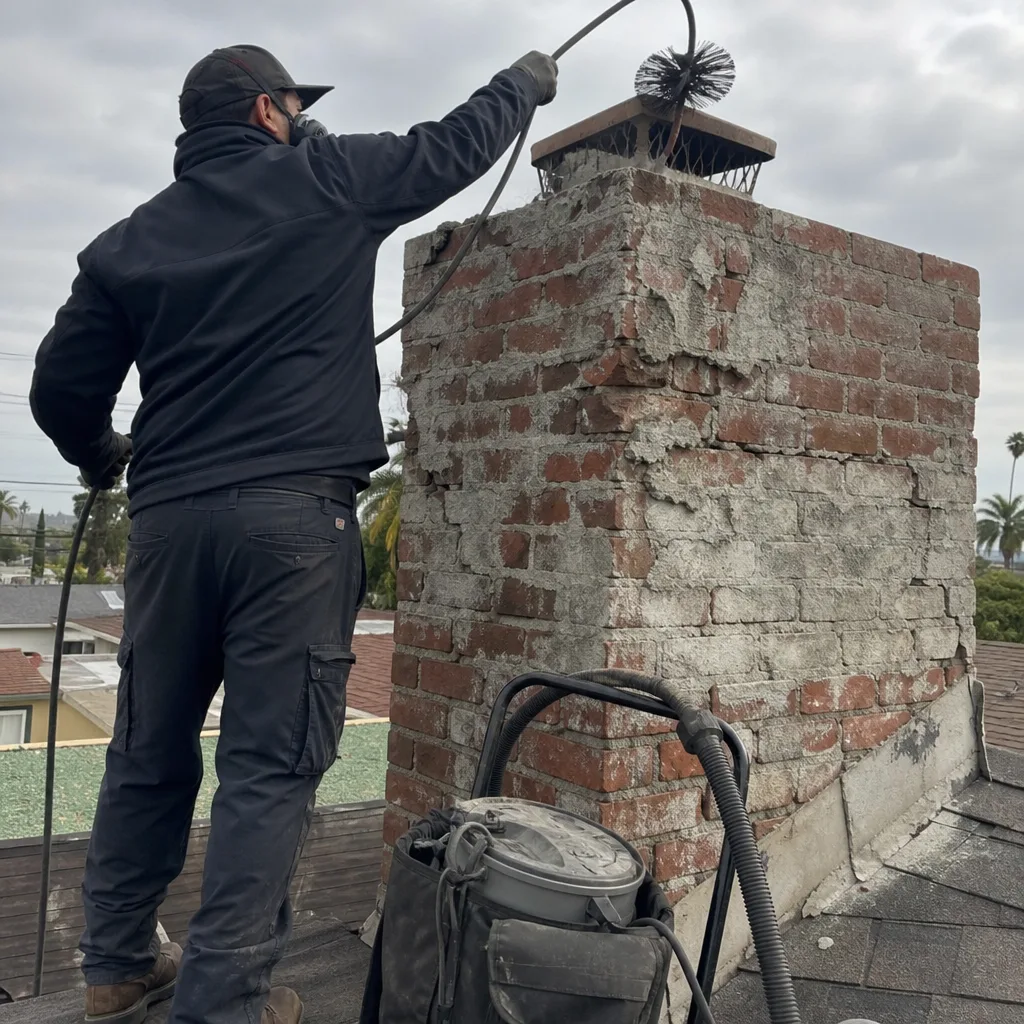 Before
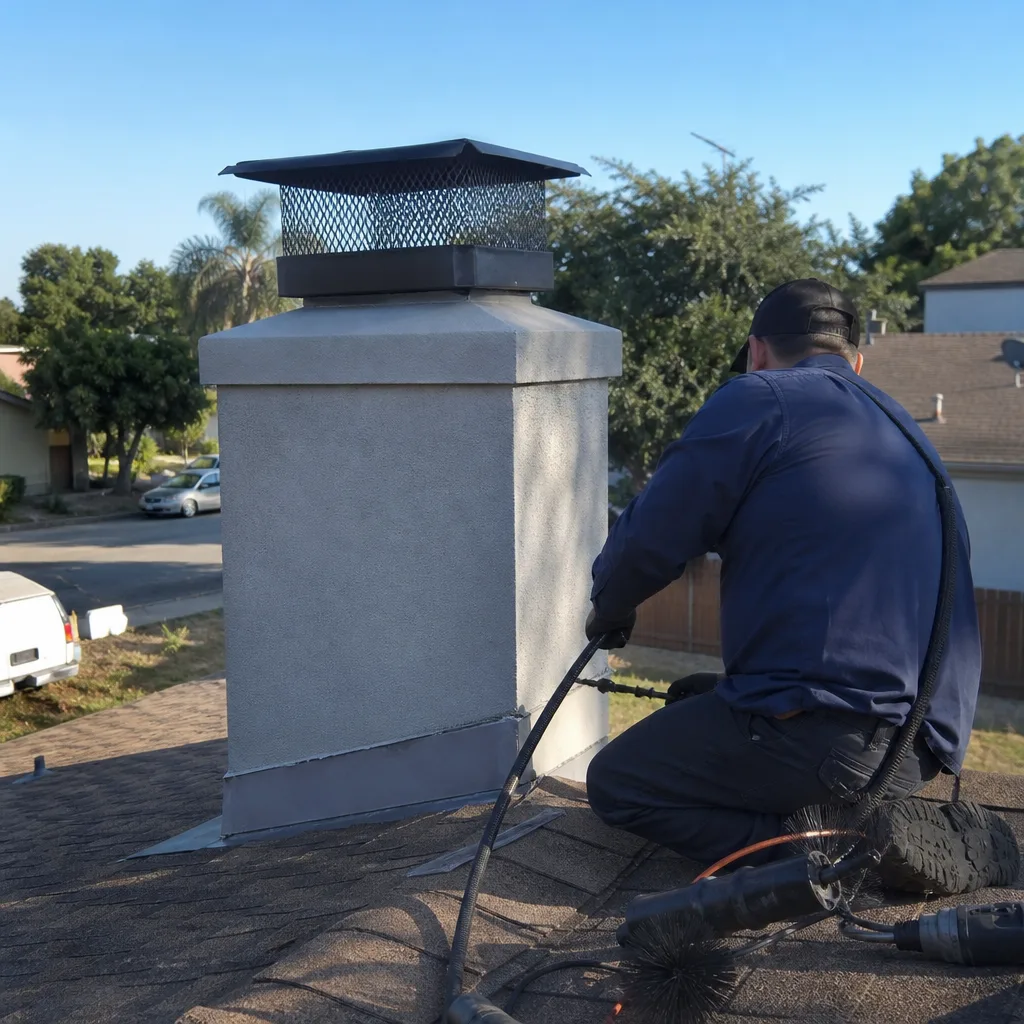 After
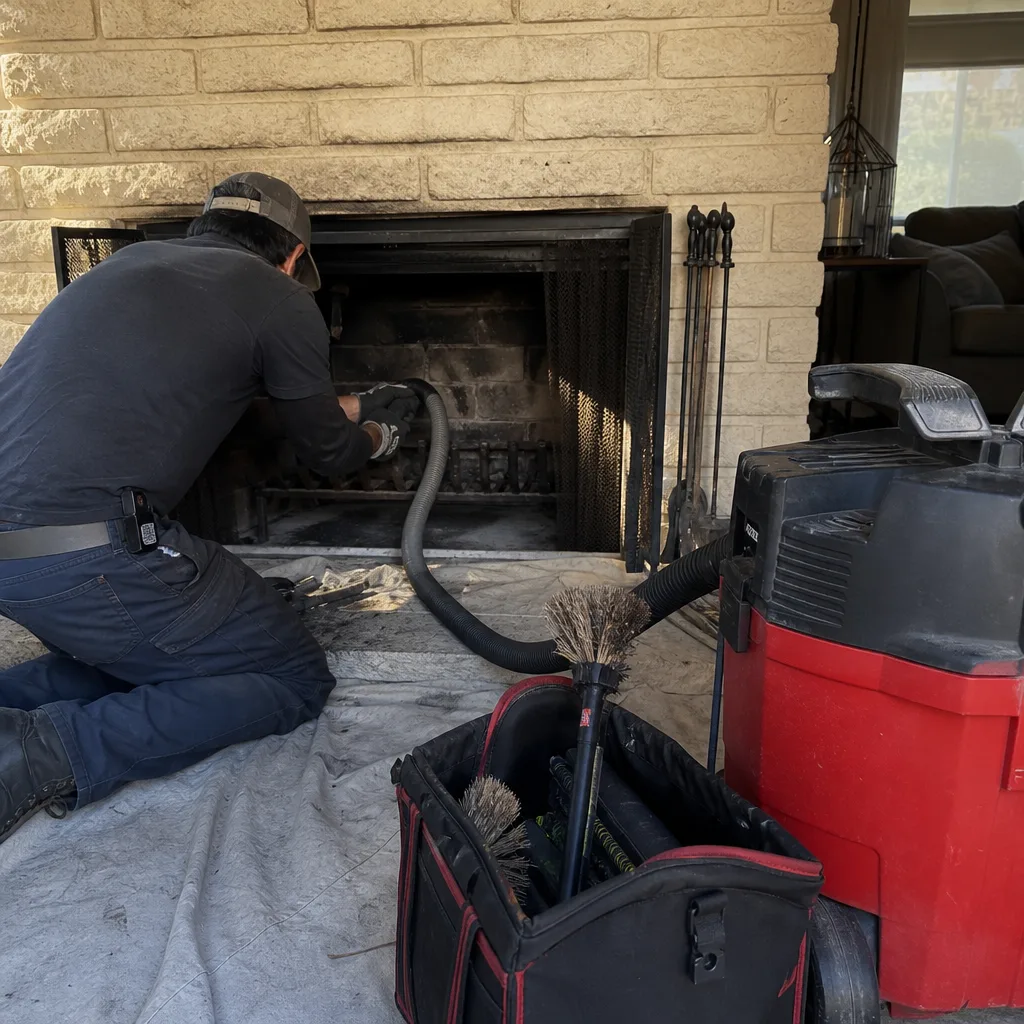 Before
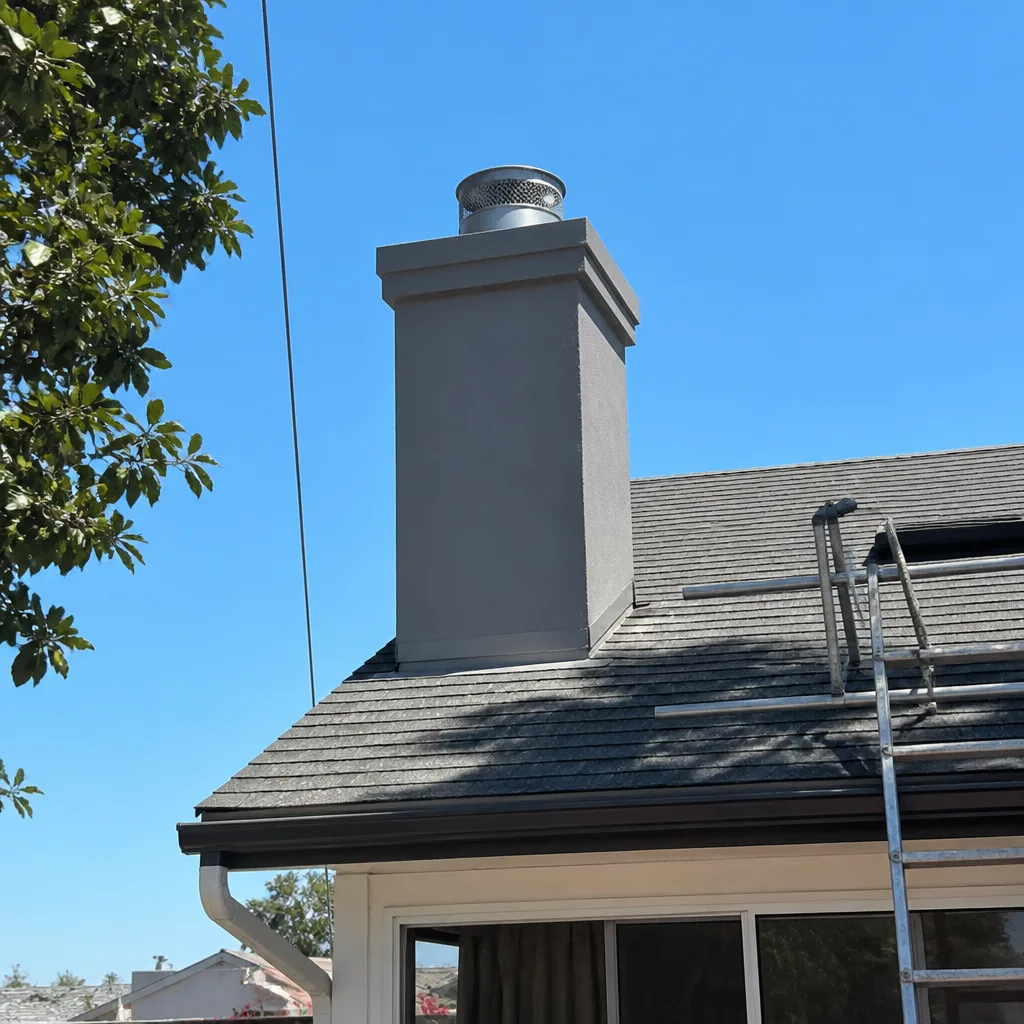 After
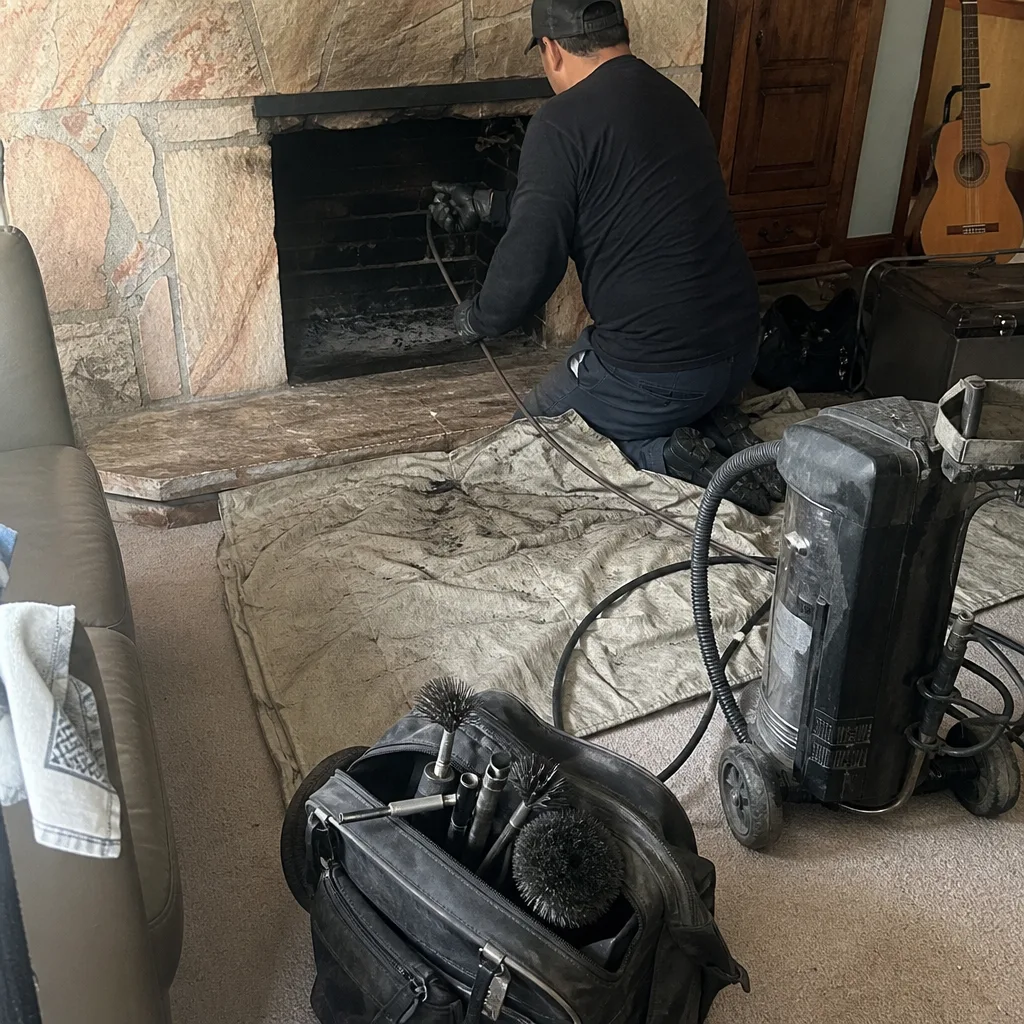 Before
 After
Common Chimney Sweep Problems We See in Covina Homes
- Shared stack backdrafting in attached homes. Covina’s citrus-era and tract homes near downtown frequently tie two fireplaces into one clay-tile flue stack. When one side is capped, blocked, or pulling negative pressure, smoke and carbon monoxide from the actively burning neighbor can back up through the adjacent firebox. We check both sides every time.
- Palm fronds and bird nests plugging dormant flues. Covina’s palm-lined streets drop fronds into open chimney caps, and starlings and sparrows build nests in the long off-season. A chimney that sat clean in March can be completely blocked by November, which is why that first cold-weather fire smokes the whole house.
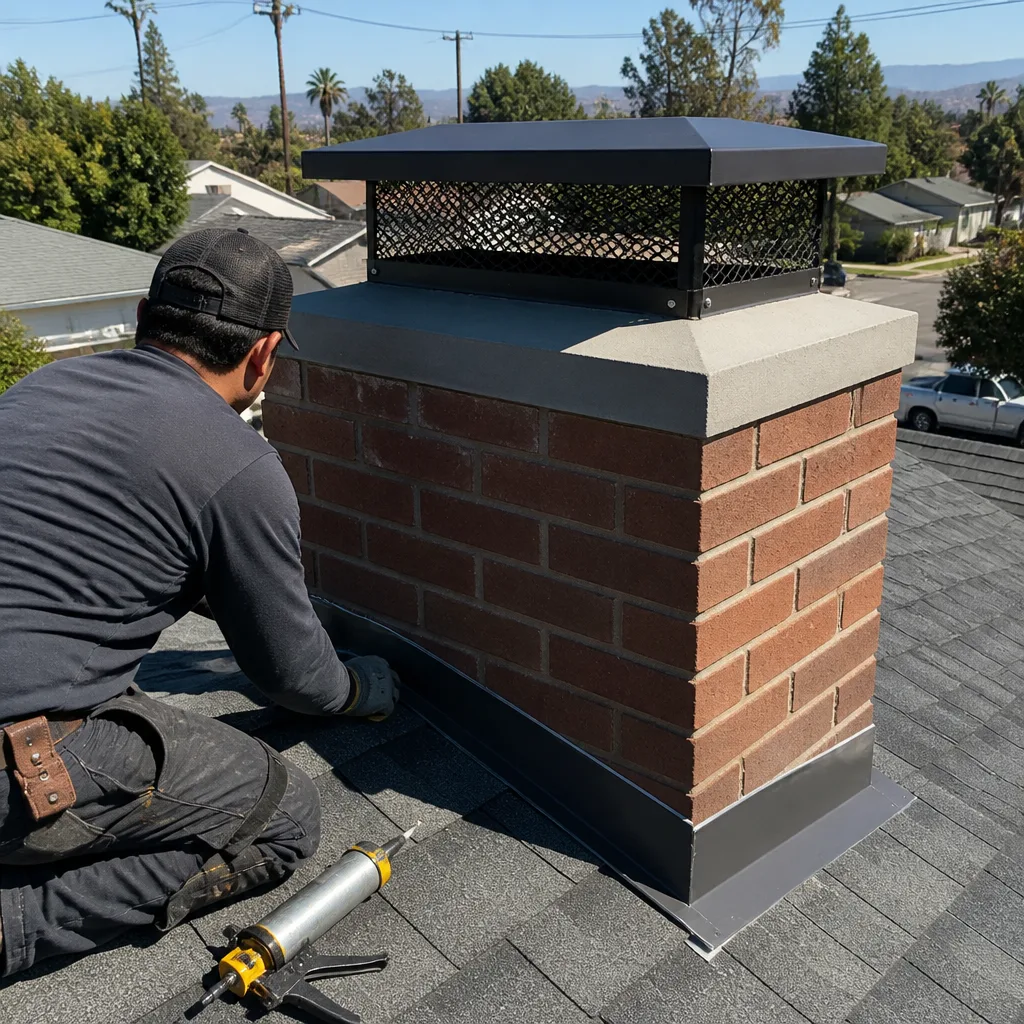
- Cracked crowns and flashing leaks on stucco tract roofs. The crown is the concrete cap on top of the chimney. Covina’s dry summers and occasional heavy winter rains cycle those crowns through enough expansion and contraction to crack. Water gets in, spalls the firebox, and rusts the damper. You won’t see it until the damage is done.
- First-degree creosote glazing inside the smoke chamber. Even light seasonal burning builds creosote in Covina’s clay-tile chimneys, and because the flue walls are masonry rather than smooth steel, that creosote grabs hold fast. The glaze feeds on itself and eventually restricts the flue opening, reducing draft and increasing the chance of a chimney fire.
Pricing for Chimney Sweep in Covina, CA
We Also Serve Cities Near Covina
Our crews work throughout the San Gabriel Valley, so we’re consistently in Covina and the surrounding communities. That includes Irwindale, Azusa, Citrus, and West Covina. If you’re in one of those neighboring cities and want the same straight talk on chimney safety, same brands, same pricing, call the number below. One call covers it.
Serving Covina, CA — Our Local Coverage Area
We’re based in the Covina area and know this community well. Use the map below to see our service coverage — if you’re nearby, we can almost certainly help.

FAQs About Chimney Sweep in Covina
My neighbor and I share one chimney stack in our attached Covina home, do both flues need sweeping?
Yes. Both flues inside a shared masonry stack should be swept at the same time because blockage on one side creates backdraft pressure that affects the other. When one Covina homeowner’s flue is packed with debris and their attached neighbor lights a fire, smoke and carbon monoxide can push back down into the second firebox. We sweep both flues, verify draft on each side, and confirm the cap and terminations are clear before we call the job done. If your shared stack hasn’t been serviced on both sides, call (855) 554-2841 and we’ll schedule both appointments for the same visit.
Why does my Covina fireplace smoke the whole house the first time I light it each winter?
Because the flue collected debris during the long idle season. Covina’s mild winters mean most fireplaces sit unlit from March through November, and palm fronds, leaf litter, and birds’ nests drop into unattended chimneys all summer. When you light that first fire, the smoke hits the blockage and rolls back into the living room instead of venting. An annual sweep before the first burn fixes it, and we’ve had Covina homeowners tell us the first clean fire after a sweep is the first one that didn’t smoke the couch. We can usually get to you within a few working days in the 91722, 91723, and 91724 area.
Does NFPA 211 really require an inspection if I barely burn my fireplace?
Yes. NFPA 211 requires an annual inspection of chimneys, fireplaces, and vents regardless of how often you burn. The standard doesn’t care whether you light one fire or fifty. Covina’s climate makes this more important, not less, because the long dormant stretch allows debris accumulation and water intrusion that heavy-use fireplaces burn off before it becomes a problem. A Level 1 inspection catches the cracked crown and the dislodged cap before the first fire of the season. Skipping it means discovering the problem the hard way, with smoke, water stains, or worse.
What does first-degree versus third-degree creosote mean for my Covina chimney?
First-degree creosote is loose, flaky soot that brushes out with a standard sweep and is normal for anyone burning even occasional wood fires. Third-degree creosote is a hard, shiny, tar-like glaze that bakes onto the flue wall and feeds on itself, restricting the opening and dramatically raising chimney fire risk. Covina homeowners who only burn during the holiday season can still develop third-degree glaze in the smoke chamber because the firebox runs below full temperature, producing incomplete combustion that deposits heavy creosote. If you’re seeing shiny black buildup inside your firebox, call (855) 554-2841 for a camera inspection and we’ll show you what’s actually in the flue.
Can you clean a fireplace with an original cinderblock open hearth and clay-tile flue?
Yes, that’s most of what we clean in Covina. The cinderblock hearth and clay-tile liner were standard construction for the city’s 1950s-1970s tract homes, and they respond well to proper brushing and smoke chamber service. We match the brush to the liner dimensions rather than forcing a generic size through, and we check the firebrick and hearth extension while we’re in there. The one thing to watch with original clay-tile systems is that the liner may already be cracked or spalling, and that’s where a Level 2 camera inspection tells us if you’re fine to keep burning or need a resurfacing with HeatShield or a reline with DuraFlex.
If your Covina chimney hasn’t been checked this year, don’t wait until the first cold snap reveals a blockage. Call Ruben Acosta and the Hickory Chimney Sweep team at (855) 554-2841 for a free estimate. We service the entire Covina area, from the tract neighborhoods off Citrus to the older homes near downtown, and we’ll give you a straight answer on what your chimney actually needs.
Written by Ruben Acosta, Owner at Hickory Chimney Sweep, serving Covina and the San Gabriel Valley.