
Last updated October 31, 2026
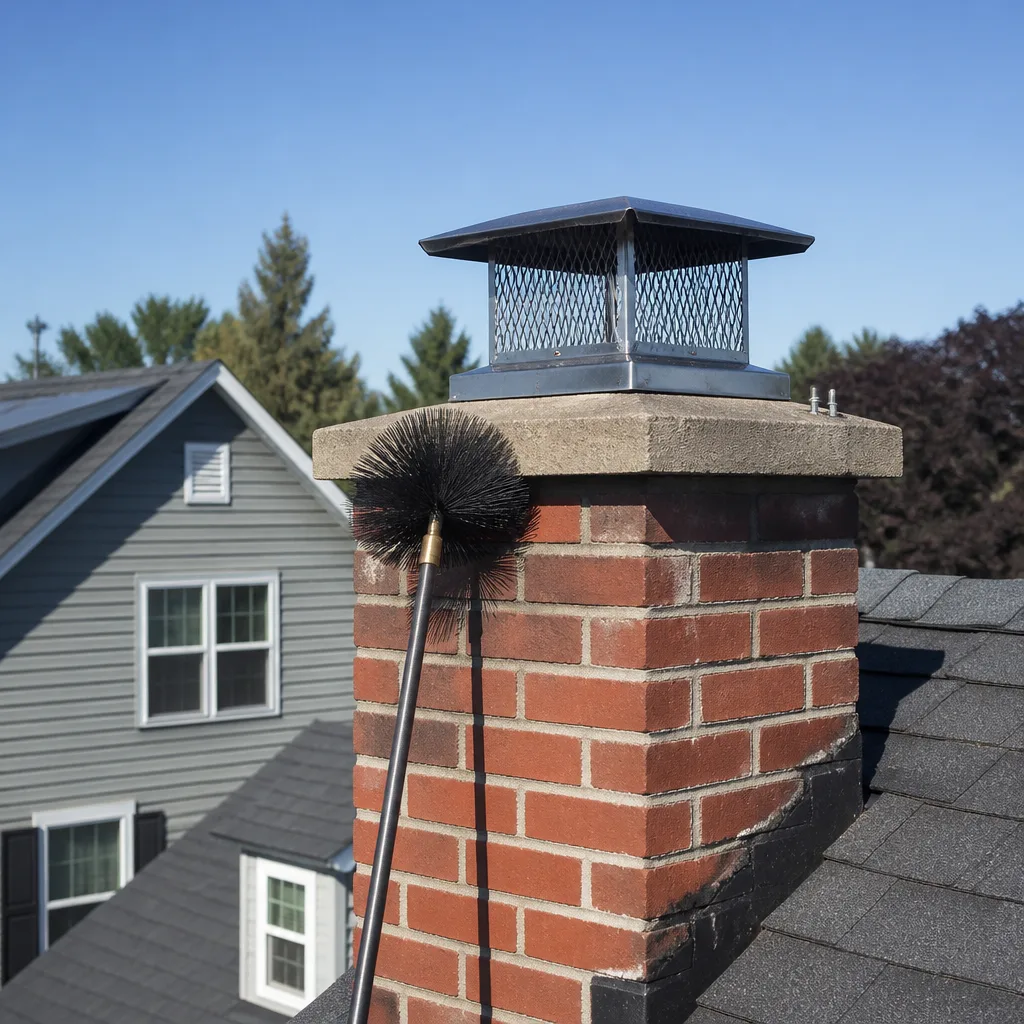 Sweep & inspection
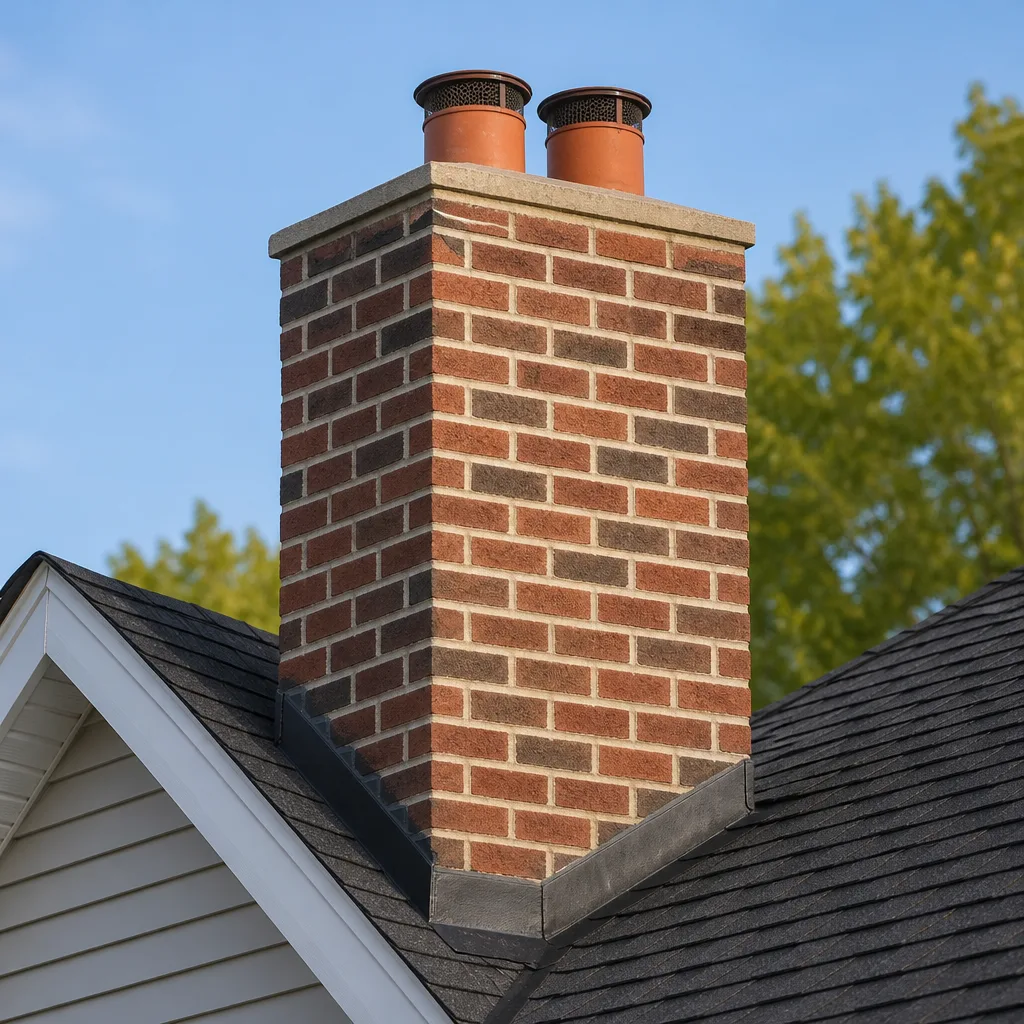
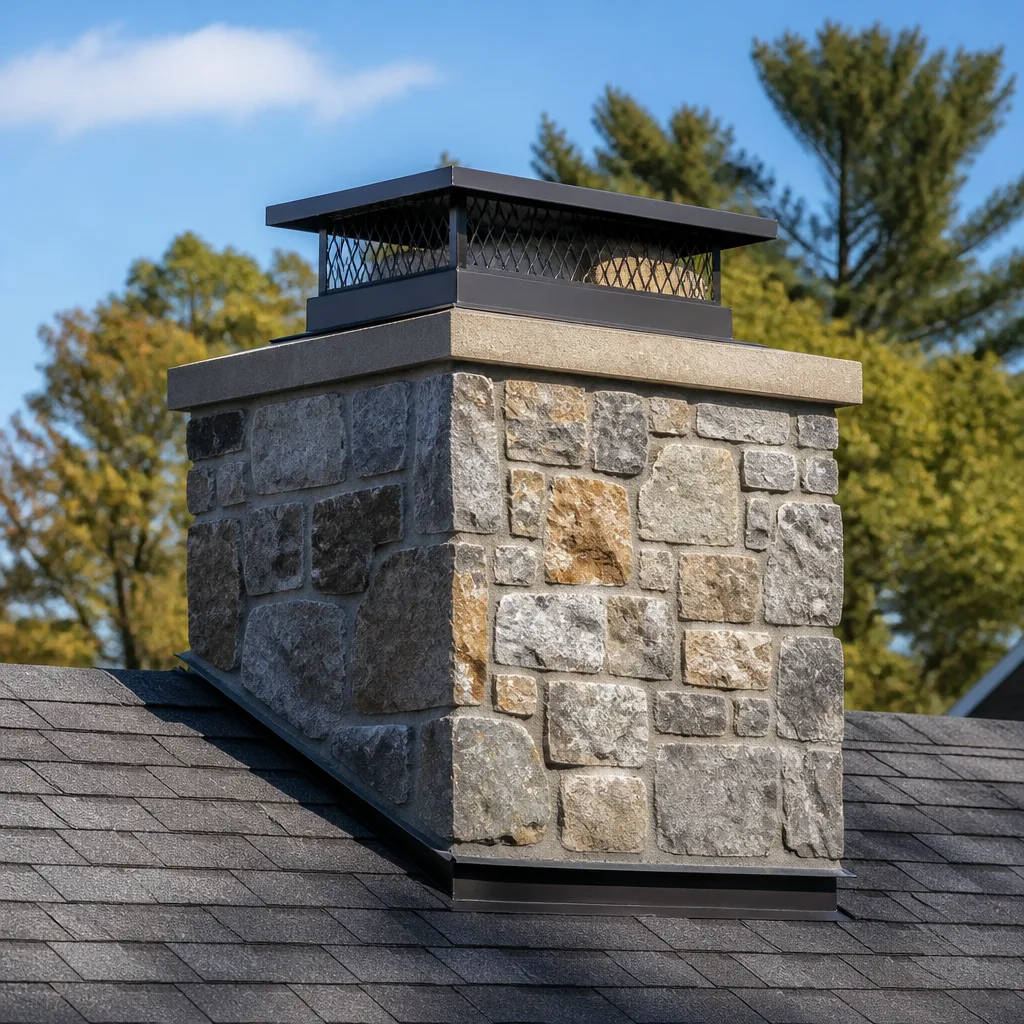 Caps & crowns
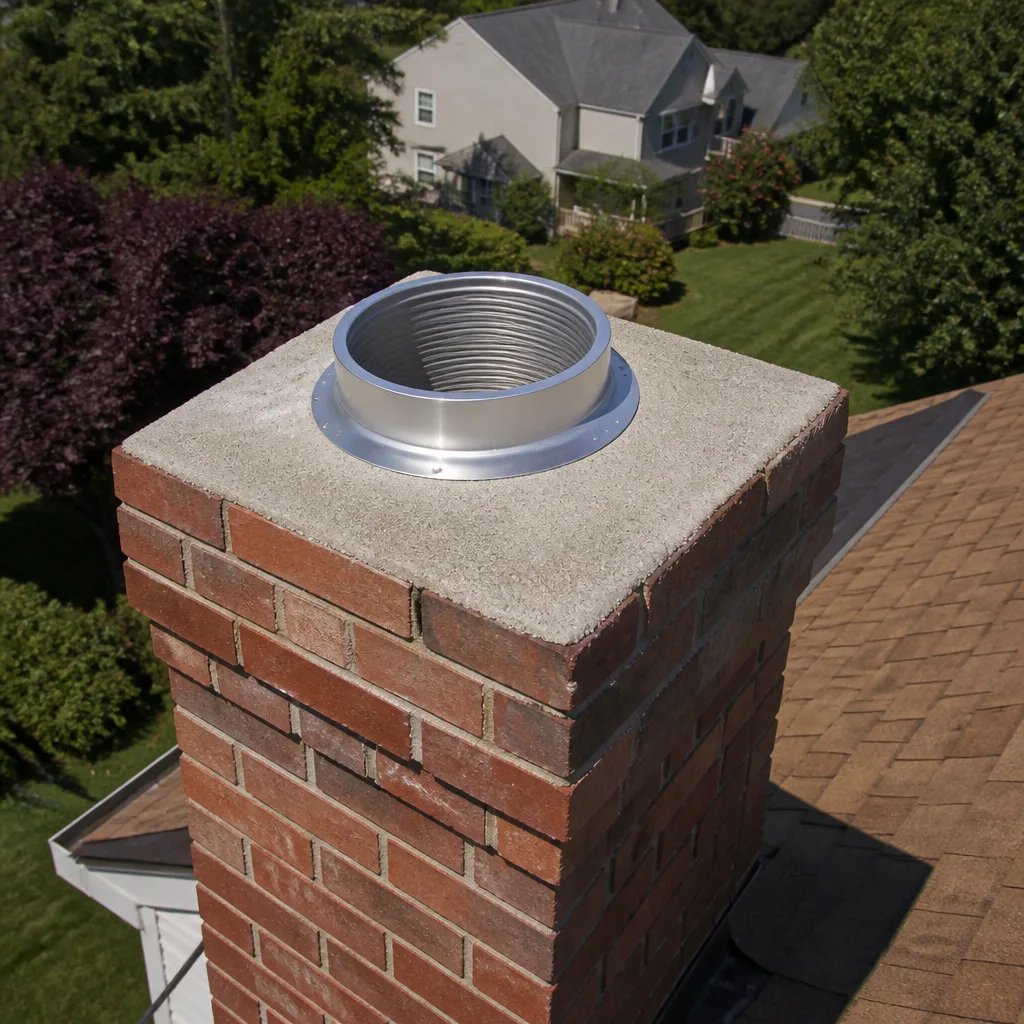 Flue relining
 Masonry repair
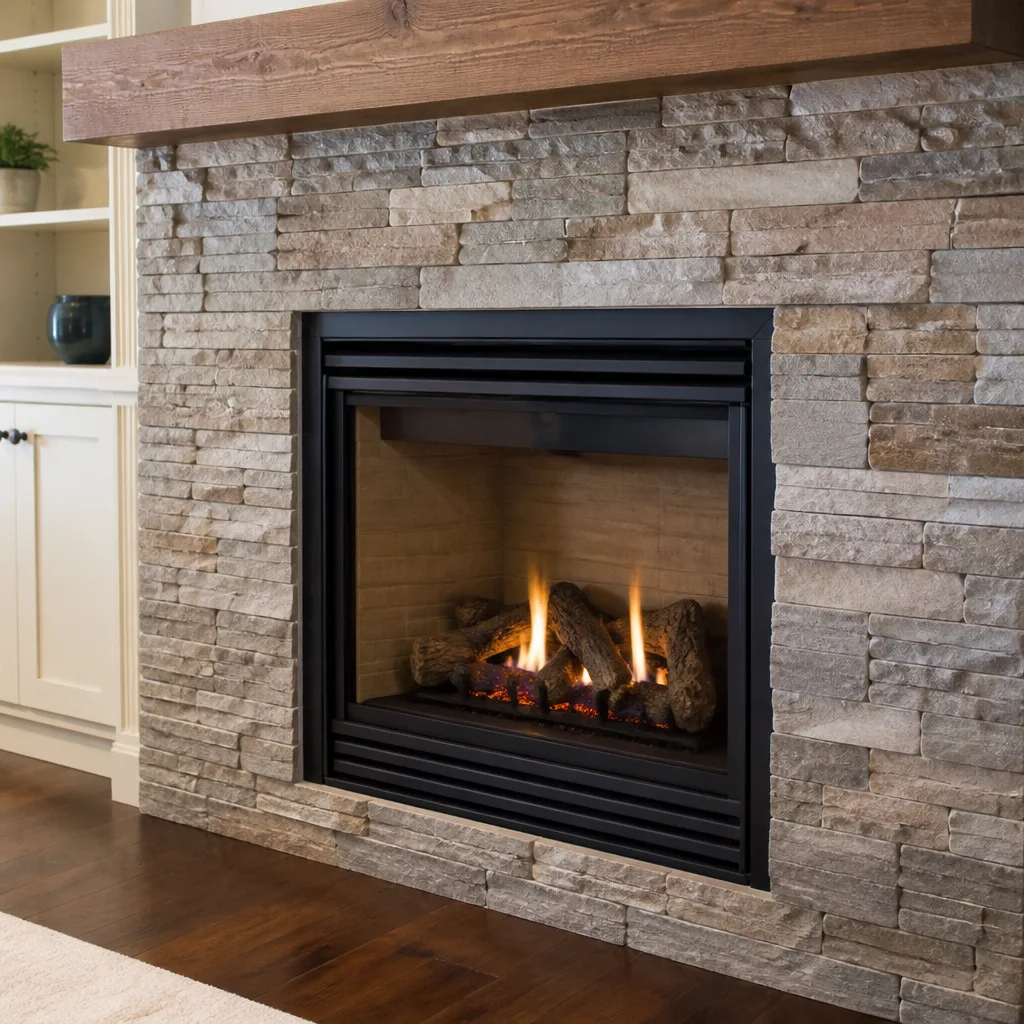 Gas fireplace service
Level 1 sweep and inspection to the NFPA 211 annual standard - flue, crown, cap, and flashing checked and photographed
Chimney sweep logs do not sweep chimneys. They loosen some creosote - which then falls where a brush and vacuum still have to collect it.
The Complete Guide to Chimney Cleaning in East Los Angeles
Most East Los Angeles homeowners burn their fireplace fewer than 10 times a year, which sounds safe. It isn’t. Low-use fireplaces are exactly where Stage 2 glazed creosote develops fastest, because fires that never fully heat the flue condense more tar than they burn off. Add the Whittier Narrows fault zone to that equation and you have chimneys that need a different kind of attention than what a generic sweep checklist provides. This guide maps what a full-scope chimney cleaning in East Los Angeles actually covers, why each step matters in this specific ZIP code, and what gets missed when the job is treated as a quick brush-up rather than a fire-safety inspection.
Styles & brands we work with
Quick Answer
Chimney cleaning in East Los Angeles costs between $149 and $299 for a standard sweep, with the final price depending on flue condition, creosote stage, and whether repairs are needed. The job should include a camera inspection, not just brushing, because East LA’s seismic activity creates hidden flue damage that a visual check from the roofline will miss. A proper cleaning takes 45 to 90 minutes and should end with a written report and photos of anything that needs attention.
Table of Contents
- Why East LA Chimneys Are Different
- What a Full-Scope Chimney Cleaning Includes
- Creosote Stages and What They Mean for Your Home
- Seismic Damage and Your Chimney
- Level 1 vs. Level 2 Inspections: What East LA Homes Need
- How Often Should You Clean Your Chimney?
- The Dryer Vent Connection: Why One Appointment Covers Both
- What a Chimney Cleaning Costs in East LA
- Common Mistakes to Avoid
- When to Call a Professional
- Frequently Asked Questions
- The Bottom Line
Why East LA Chimneys Are Different
East Los Angeles sits in a climate that most people describe as mild, and that’s true for the humans living in it. For chimneys, the picture is more complicated. We get cool enough nights in December and January that fireplaces get lit, but rarely cold enough that they burn for hours at a stretch. What happens is a pattern of short, low-temperature fires that never push the flue past the point where creosote vaporizes. Instead, smoke condenses on the flue walls, layer after layer, building a dense tar that hardens into what chimney professionals call Stage 2 glazed creosote.
In colder climates, a fireplace used heavily every day through winter tends to burn hotter. Flue temperatures stay high long enough to dry out much of the creosote, leaving a flaky, powdery Stage 1 material that brushes off easily. East LA’s pattern does the opposite. We see chimneys in neighborhoods like Belvedere, City Terrace, and Boyle Heights where the creosote has become a shiny, hardened shell that resists standard brushing. That shell is also the most flammable form creosote takes. When it does ignite, it burns like glue at temperatures above 2,000 degrees Fahrenheit.
The second factor here is the ground itself. The Whittier Narrows fault zone runs through this part of the county. Homes across East Los Angeles have felt the effects of temblors centered in Montebello, Pico Rivera, and Whittier over the decades. Each event stresses the mortar joints between flue tiles. Small cracks appear. Tiles shift. A sweep that only cleans the surface leaves those failures invisible until smoke starts pushing into wall cavities during the next fire. A proper chimney cleaning in East Los Angeles has to treat the flue as a structural system, not just a pipe that gets dirty.
What a Full-Scope Chimney Cleaning Includes
Here is what a complete chimney cleaning in East Los Angeles should involve, step by step. If a service quotes you without covering these points, you’re not getting the full job.
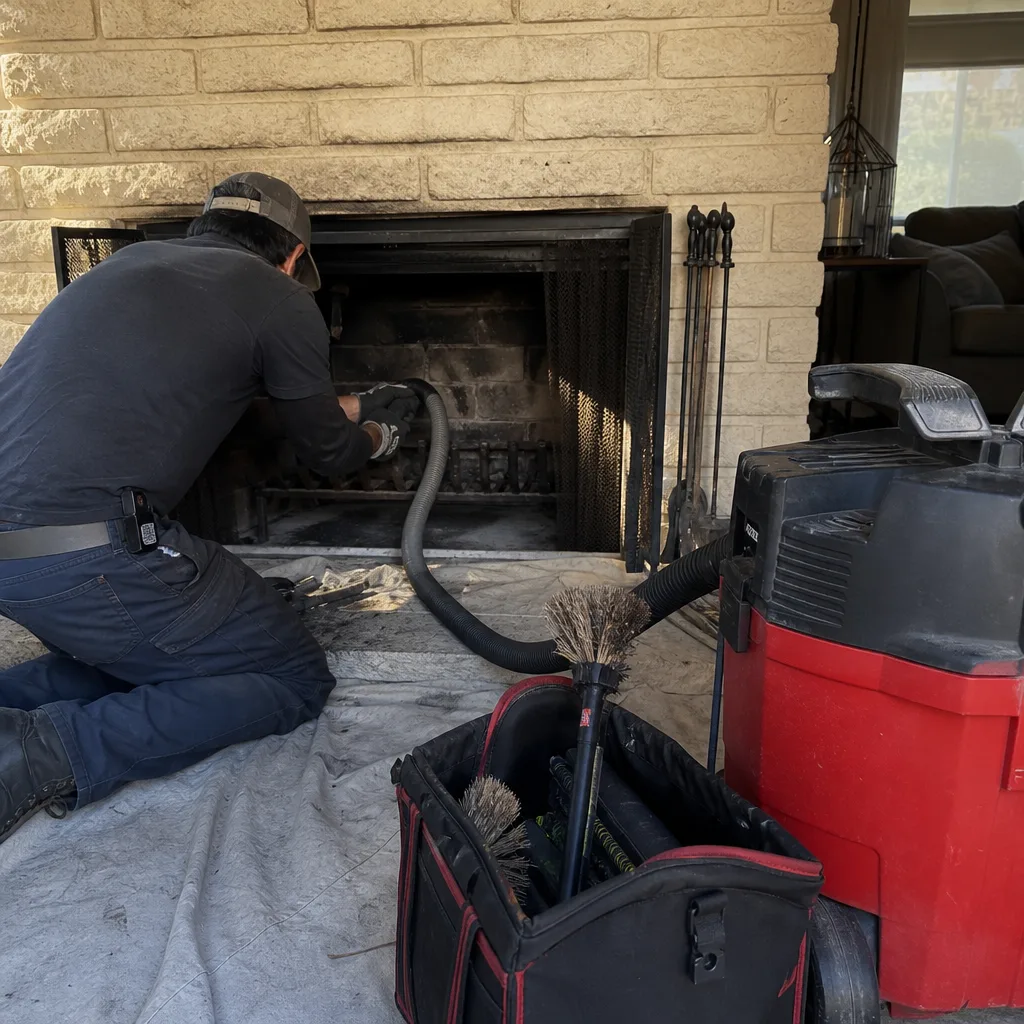
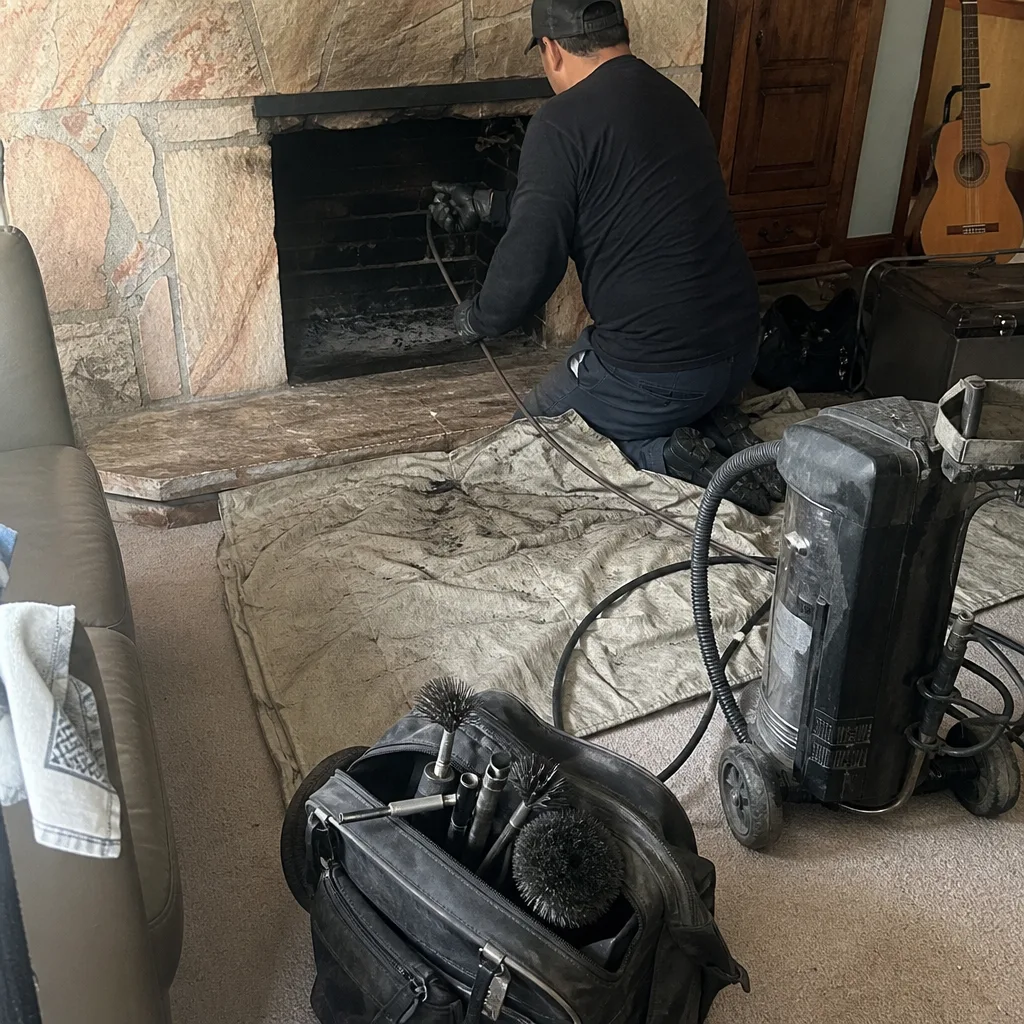
- Interior protection setup. Drop cloths or floor runners are placed around the fireplace opening before any equipment enters the home. The area gets sealed to keep soot dust from drifting into living spaces during the cleaning.
- Firebox inspection. The technician examines the firebox walls, hearth, damper, and smoke chamber before touching the flue. Cracks here change the safety picture immediately.
- Mechanical brushing of the flue. A motorized brush or rod-and-brush system scrubs the entire flue from top to bottom, sized to the exact flue dimensions rather than a one-size-fits-most head.
- Smoke chamber and damper cleaning. These areas collect soot and debris just as the flue does. Most chimney fires actually start in the smoke chamber, where heat from an ember meets concentrated soot deposits.
- Camera inspection of the flue interior. A calibrated video camera runs the full length of the flue after brushing. This is the step that distinguishes a professional sweep from a brush-only job. The camera sees spalled tile, offset liner sections, and hairline cracks that are invisible from above.
- Creosote stage documentation. The technician records whether the creosote is Stage 1, Stage 2, or Stage 3 and notes where the heaviest deposits sat. This tells you what fire risk your chimney carried and whether an additional treatment is needed.
- Written report with photos. You should walk away with a written summary and images from the camera run. No recommendations made on feel. If a repair is suggested, you should be able to see the problem yourself in the photos.
Some services in the area stop at step 4. The brush goes in, the brush comes out, the invoice gets written. That leaves the two most important diagnostic steps undone. When we handle a cleaning in East LA, the camera inspection is not an upsell. It is the entire point of the visit, because the flue is where fires start and where seismic damage hides.
Creosote Stages and What They Mean for Your Home
Understanding creosote helps you make decisions about your own chimney. Here is what each stage looks like and what a professional can do about it.
- Stage 1: Flaky soot and fine powder. This is the normal byproduct of complete combustion. It brushes away easily with a standard sweep. Most homeowners operating a fireplace normally will have Stage 1 deposits after a season of use.
- Stage 2: Glazed, hardened tar. This is the stage we see most often in East Los Angeles. It forms when smoke condenses on flue walls that never get hot enough to re-burn the residue. Stage 2 creosote cannot be brushed off with standard tools. It requires chemical treatment followed by mechanical agitation, and in some cases, a rotary loop system designed specifically for hardened deposits.
- Stage 3: Dense, solidified glaze. At this stage, creosote has built into a thick, fuel-rich layer that can ignite from a single stray ember. Stage 3 often narrows the flue opening significantly, reducing draft and pushing smoke into the home. Removal requires specialized equipment and sometimes a resurfacing recommendation if the flue surface has degraded beneath the buildup.
The key fact about Stage 2 and Stage 3 creosote is this: they do not come from overuse. They come from the short, low-heat fires that are the default pattern for fireplaces in milder climates. A homeowner in East Los Angeles who burns 8 times a winter can have a worse creosote problem than someone in Minnesota who burns 80 times. It’s the temperature, not the volume.
Seismic Damage and Your Chimney
The Whittier Narrows fault does not announce itself when it damages a chimney. The typical failure is quiet: a mortar joint separates between two flue tiles, or a tile develops a hairline crack that lets combustion gasses escape into the chase. You will not see these from the outside of the house. You may not even notice a problem indoors until the smell of smoke lingers long after a fire.
Here is what seismic movement does to chimneys over time, based on what we see across the East LA landscape:
- Mortar joint erosion. The repeated flexing of the structure during small quakes breaks down the mortar between flue tiles and between the chimney body and the house wall. Water then enters the gaps and accelerates the deterioration.
- Spalled flue tiles. A spall is a chip or flake that separates from the interior face of a clay tile. Once a tile spalls, the flue surface becomes uneven, smoke eddies around the damaged area, and creosote accumulates faster at that point.
- Offset liner sections. A shift in the chimney structure can leave one flue tile slightly out of line with the one below it, a condition called offset. The resulting ledge catches debris, reduces draft, and creates a point where exhaust can stall and deposit creosote heavily.
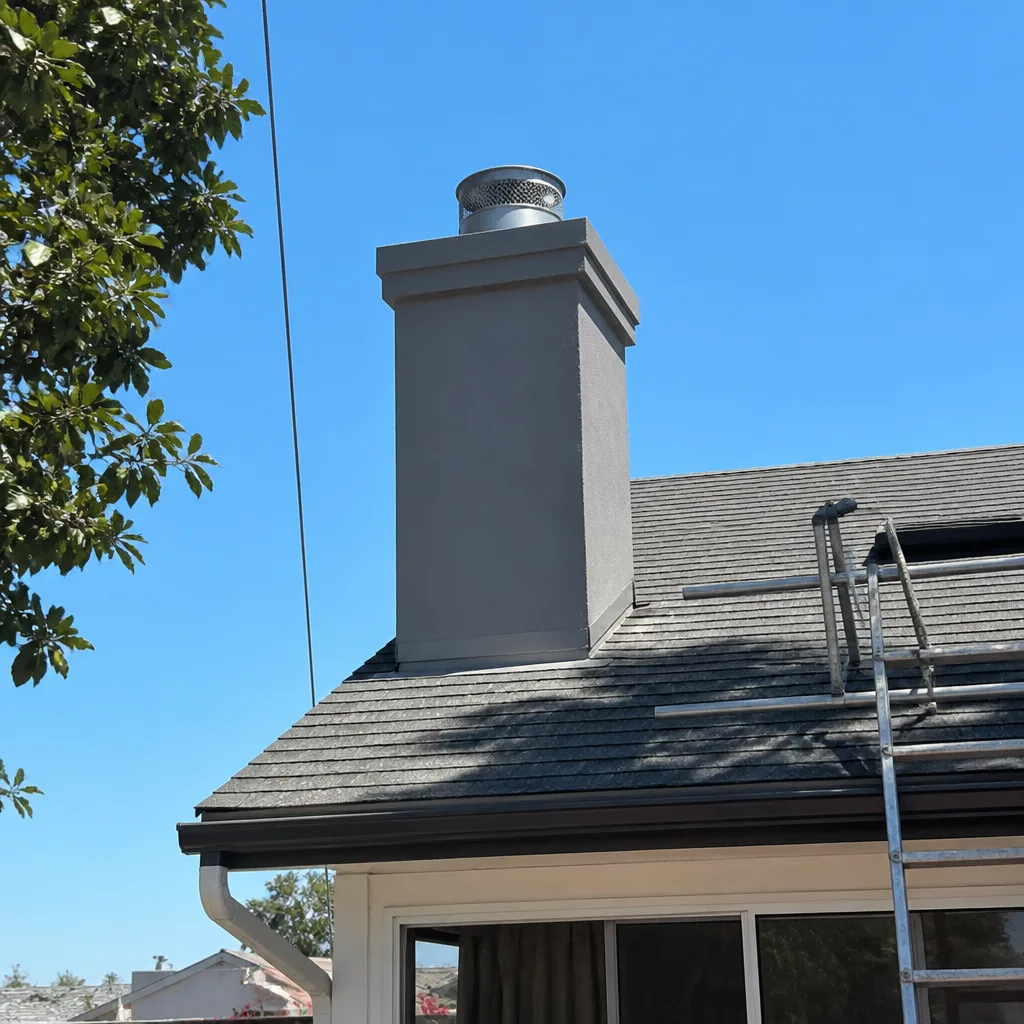
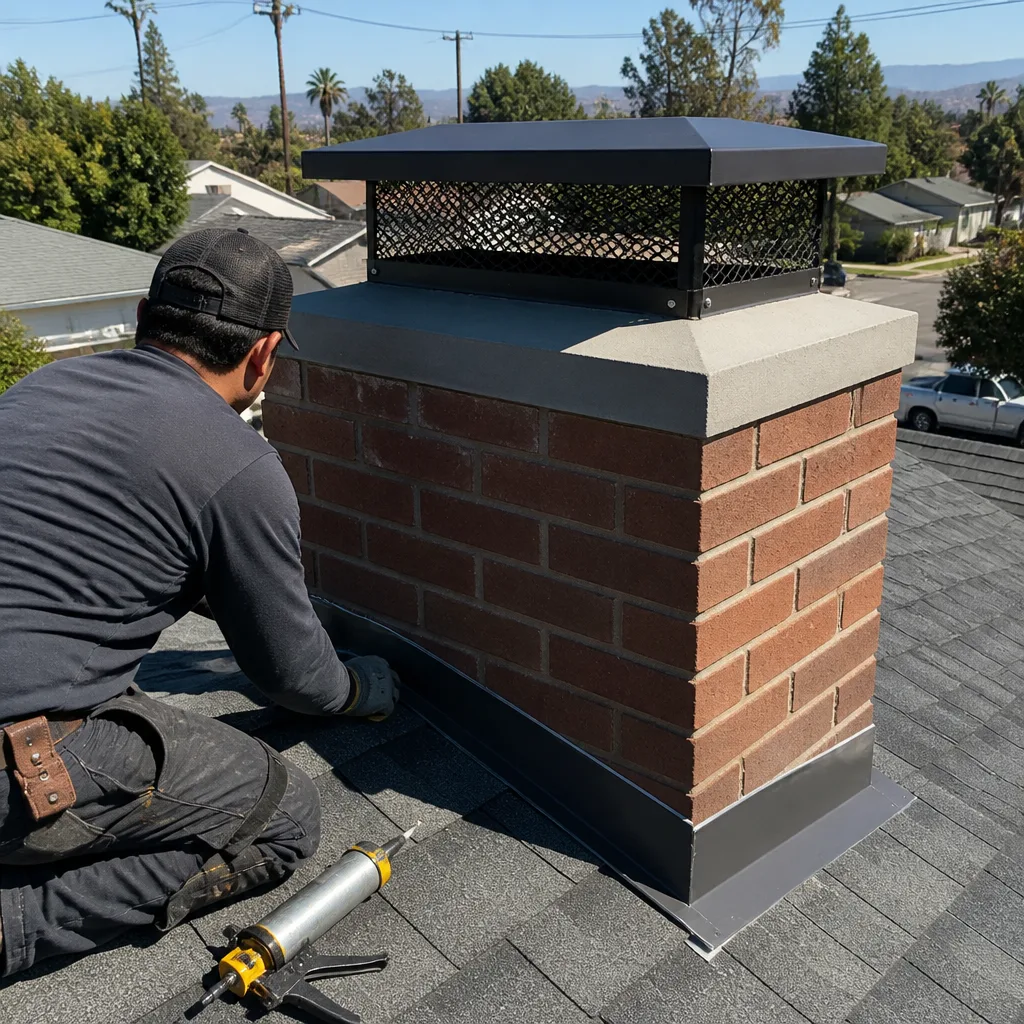
- Crown and cap damage. The concrete crown at the top of the chimney and the metal cap that covers the flue opening both suffer in earthquakes. A cracked crown lets water into the chimney interior, which then works its way through the mortar and tile over time.
A sweep-only operator checks the firebox, runs a brush, and declares the chimney clean. Those spalls and offsets remain untouched. That is why a camera inspection after brushing matters so much in this ZIP code. It is the only way to document what the fault zone has done to your flue since the last cleaning. And for homeowners who want real protection, that documentation is the starting point for a repair plan, not just a note on a clipboard.
Level 1 vs. Level 2 Inspections: What East LA Homes Need
The National Fire Protection Association’s NFPA 211 standard defines three levels of chimney inspection. Understanding the difference tells you what to ask for and when, and pairs well with our How to Hire a Chimney Cleaning Contractor in East Los Angeles: A Step-by-Step Guide.
Level 1 inspection applies when a chimney is in continuous service and nothing about the system has changed. The technician examines the readily accessible portions of the chimney, checks for obstructions, confirms the damper opens and closes, and verifies that there are no combustibles within the required clearance. This is what most standard cleanings include.
Level 2 inspection applies when any of the following occur: the property is being sold, the building has undergone an earthquake or seismic event, a fire has occurred in the chimney, or the appliance has been changed from one fuel to another. The Level 2 adds a camera scan of the flue interior and an exterior examination of the chimney structure, accessible attic areas, and clearances.
Here is the practical translation for East Los Angeles homeowners. If you have lived in the home through any notable seismic activity in the past decade, and you have never had a camera inspection of your flue, you have not had a Level 2. The NFPA standard treats earthquake exposure as a trigger. The Whittier Narrows fault zone has made that trigger a regular occurrence here. Our recommendation is simple: at minimum, every chimney in East LA should get a camera inspection during its annual cleaning. That converts a Level 1 into what amounts to a practical Level 2, and it catches the damage that matters before it becomes a wall fire or a carbon monoxide problem.
How Often Should You Clean Your Chimney?
The general rule from the Chimney Safety Institute of America is that a chimney should be swept when creosote reaches 1/8 inch of thickness, and that most wood-burning chimneys need annual cleaning. But here is the East Los Angeles nuance, covered in more detail in our Seasonal Chimney Cleaning Care for East Los Angeles: Year-Round Homeowner’s Guide:
Your chimney does not care how many fires you burned. It cares how much residue those fires left behind. A homeowner who burns 10 fires of the low-heat type common here can deposit more creosote than someone who burns 40 hot fires elsewhere. The annual schedule is a floor, not a ceiling.
We recommend this approach for East LA homes:
- Yearly cleaning for any wood-burning fireplace that gets used at all. This is the baseline. It resets the creosote load and gives you a professional set of eyes on the system.
- Twice-yearly cleaning for homes that burn unseasoned wood, notice strong smoke odors during fires, or have had past creosote problems. Every home that has ever shown Stage 2 or Stage 3 buildup should default to this schedule.
- Immediate inspection after any felt earthquake, even a small one, if you plan to use the fireplace before your next scheduled cleaning. A quick camera check costs less than a damaged liner.
- Annual cleaning for gas fireplaces as well, though the residue profile differs. Gas units produce no creosote but can accumulate dust, pet hair, and debris that affects combustion and air quality.
If you’re not sure which category you fall into, the safe call is to have a cleaning done and let the camera inspection tell you where you stand. The flue does not lie about its own condition.
The Dryer Vent Connection: Why One Appointment Covers Both
This is the section most chimney guides never include, and it’s the one that costs East Los Angeles homeowners the most in the long run. Here is the fact: according to the U.S. Fire Administration, clothes dryer fires account for roughly 2,900 residential fires each year in the United States. Chimney fires are less common but burn hotter and spread faster. Your fireplace and your dryer vent are the two leading appliance-related fire hazards in your home. They are also almost never serviced by the same provider.
We built our service around closing that gap. A single visit to your East LA home can handle the chimney and the dryer vent in the same afternoon. The technician who cleans your flue and runs a camera through it is the same person who pulls the dryer away from the wall, disconnects the vent, and removes the lint load that has been building since the last time anyone looked at it. Lint is astonishingly flammable. It collects in the vent pipe, restricts airflow, and forces the dryer to work harder, which raises exhaust temperatures. When those temperatures meet the lint, the result is a fire that starts inside your wall.
Here is the practical advantage for East Los Angeles households. Older homes dominate much of this area, and older homes tend to have longer, less efficient dryer vent runs. The vent pipe may snake through a wall, around a corner, and up to a roof cap. That long run gives lint more surface area to grab onto. A combined chimney and dryer vent visit means both of these systems get reset on the same calendar, so the annual maintenance is done as a single appointment rather than two calls to two different companies. One call covers both. Learn more about our dryer vent cleaning in South San Gabriel and how it pairs with chimney care.
What a Chimney Cleaning Costs in East LA
Pricing transparency helps you make a decision without guessing. Here are the line items you should expect on an East Los Angeles chimney cleaning quote:
- Standard chimney sweep (Level 1, no camera): $129 to $199. This covers interior protection, mechanical brushing, and basic inspection. It does not include a video scan.
- Chimney sweep with camera inspection (practical Level 2): $199 to $299. This adds the video documentation of the flue interior and the written photo report.
- Stage 2 or Stage 3 creosote removal (chemical or rotary treatment): $75 to $250 beyond the standard sweep price, depending on severity and flue length.
- Dryer vent cleaning (same-visit add-on): $99 to $149 when bundled with a chimney cleaning. This is the price range for a standard residential vent run.
- Chimney cap replacement or installation: $125 to $350 installed, depending on cap size and material. We install caps from professional-grade lines like Copperfield and Olympia Chimney, not the stamped steel versions from hardware stores.
These are the market ranges in East Los Angeles as of current pricing. The final number on your quote will depend on flue height, creosote stage, accessibility, and whether any repairs are recommended. A reputable service will give you the quote before work begins and will not change it mid-job without showing you why.
Common Mistakes to Avoid
- Skipping the camera scan. In East Los Angeles, where seismic damage is a regular reality, a brush-only cleaning gives you a false sense of security. You cannot see a cracked flue tile from the roofline, and no technician can either, without a camera.
- Burning unseasoned wood. Wet or green wood from a neighbor’s tree trim runs at a lower temperature and produces far more creosote than properly seasoned hardwood. East LA has plenty of eucalyptus and pine around, and both are terrible fireplace fuels when green.
- Ignoring the damper position. A damper that stays open when the fireplace is not in use lets conditioned air escape and lets moisture and pests into the flue. In East LA’s dry air, a fixed-open damper also pulls dust and debris into the firebox.
- Treating the chimney and dryer vent as separate problems. They are the two leading sources of appliance-related fires in homes. A single annual visit that covers both is the simplest risk-reduction routine you can put on your calendar.
- Postponing after an earthquake. Small quakes in the Whittier Narrows zone go mostly unnoticed by residents, but they are felt by chimneys. A quick camera inspection after any felt event is cheaper than a liner replacement after a chimney fire.
- Hiring based on price alone. A $99 sweep that skips the camera and the report leaves you with a clean bill of health you cannot verify. That is not a cleaning; it is a receipt.
- Neglecting the chimney cap. An uncapped or damaged flue opening lets rain, birds, and debris into the chimney. In East LA, the real threat is dry-season debris accumulating in the flue before the first fire of winter.
When to Call a Professional
You should schedule a chimney cleaning if any of these apply: you have not had the chimney serviced in the past 12 months, you smell smoke days after a fire, the damper does not open or close smoothly, you see black residue on the fireplace walls, animals have nested in the flue, or you have felt an earthquake since your last inspection and plan to burn again. None of these are situations where a do-it-yourself approach works. A chimney is a fire containment system built into the structure of your home, and the failure mode is not a mess on the hearth. It is a wall fire. If you are in East Los Angeles and any of these conditions describe your chimney, call us for a free estimate at (855) 554-2841. We will perform a full cleaning with camera documentation and give you a straight answer about what your chimney needs.
Frequently Asked Questions
A standard chimney cleaning in East Los Angeles runs from $129 to $199, and a cleaning with a video camera inspection runs from $199 to $299. Homes with Stage 2 or Stage 3 creosote pay an additional treatment fee depending on flue length and severity. Call (855) 554-2841 for an exact quote, and the estimate is free.
Not necessarily. Hairline cracks in clay tile liners can often be repaired with HeatShield Cerfractory resurfacing, a system that seals the flue interior without removing the existing tiles. Full liner replacement is recommended when the damage is structural, such as offset tile sections or large spalls. The camera report shows you exactly what the technician is looking at, so you never have to take a recommendation on trust alone.
The Chimney Safety Institute of America recommends annual sweeping for wood-burning chimneys. In East Los Angeles, where low-heat fires build creosote faster than typical usage patterns suggest, annual cleaning with camera inspection is the baseline we recommend for every home that burns even occasionally.
If you skip chimney cleaning, creosote accumulates until it reaches a stage where it can ignite from a single ember. A chimney fire burns hot enough to crack flue tiles and spread into wall cavities. The fire department may contain the flames and still leave you with a structure that needs a complete rebuild. Skipping a cleaning is not a cost savings; it is a deferred cost with compound interest.
Gas fireplaces do not produce creosote, so the fire risk from that specific source is absent. But gas units still need annual inspection for vent blockage, dust accumulation, and carbon monoxide leaks. A blocked vent on a gas fireplace can push odorless CO into the living space. Annual service is still the rule.
Yes. That is exactly how our route is built. The same technician who sweeps your flue and runs the camera will disconnect, clean, and reassemble your dryer vent in the same appointment. You can see our full scope on the Hickory Chimney Sweep home page, including the dryer vent side of the work.
We serve homes throughout East Los Angeles, including Belvedere, City Terrace, Boyle Heights, El Sereno, Monterey Park, and the surrounding communities. We also cover chimney sweeping in South San Gabriel and chimney repair in South San Gabriel. If you are in the area and need a cleaning or a camera inspection, give us a call and we will get you on the schedule.
The Bottom Line
Your chimney in East Los Angeles carries two burdens that most national advice ignores: the low-heat firing pattern that turns creosote into a hardened fuel shell, and the seismic stress that opens cracks and offsets in the flue. A proper chimney cleaning here requires more than a brush. It requires a camera, a written report, and a technician who understands what the Whittier Narrows fault zone does to chimney structures. Pair that with dryer vent cleaning and you have the two leading appliance fire risks in your home addressed in a single visit. Clean it. Repair it. Protect it. That is the sequence, and it starts with one call. For more guides & resources on keeping your home safe, visit our blog.
Contact Hickory Chimney Sweep today at (855) 554-2841 for a free estimate on chimney cleaning, repair, or dryer vent service in East Los Angeles.
Written by the team at Hickory Chimney Sweep, serving East Los Angeles since 2013.
See the difference
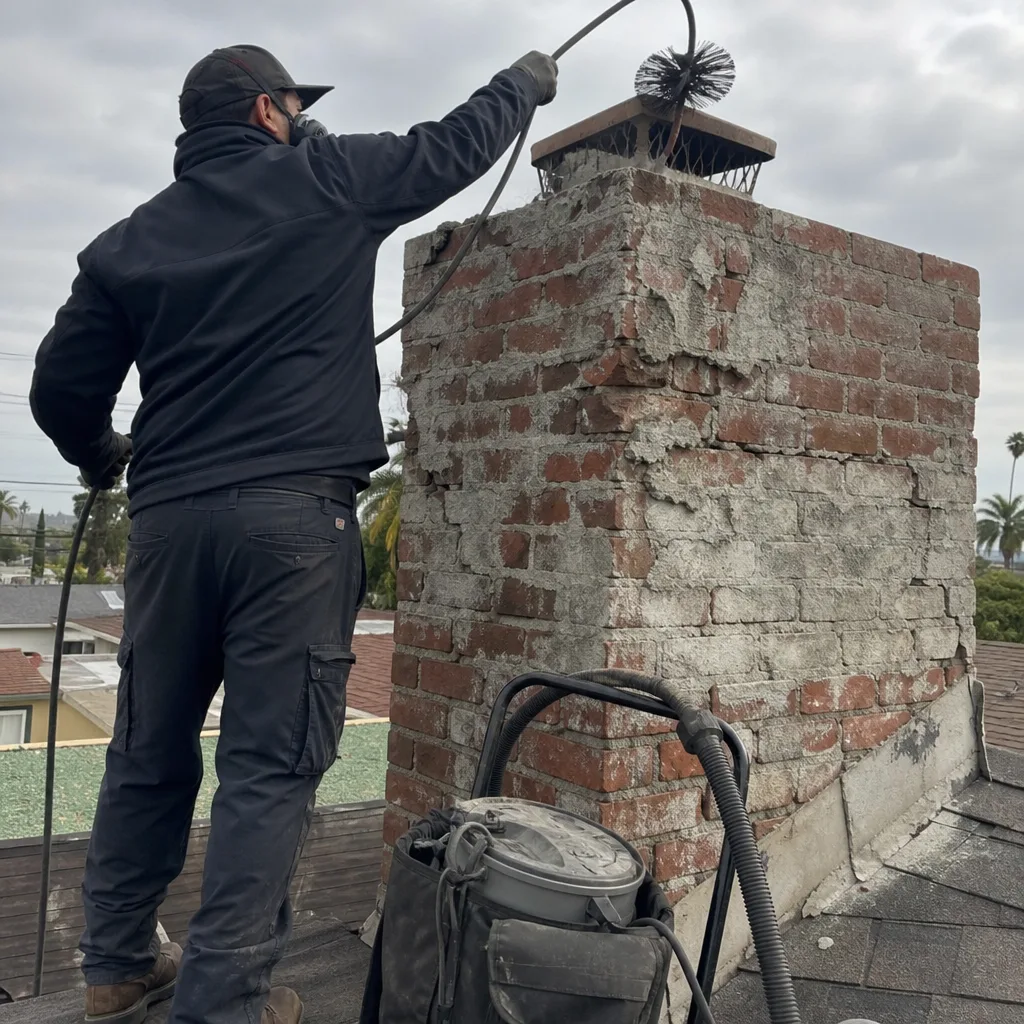 Before
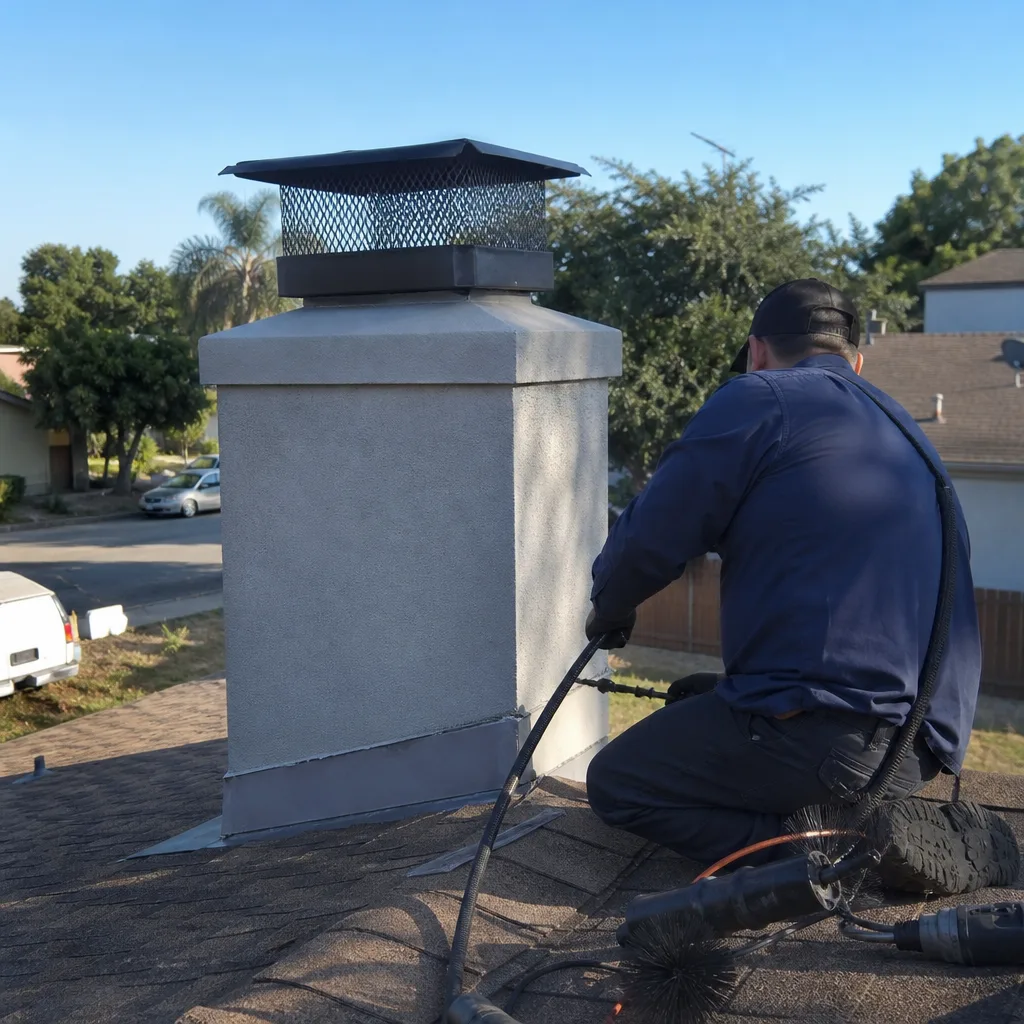 After
 Before
 After
 Before
 After