
Last updated October 31, 2026
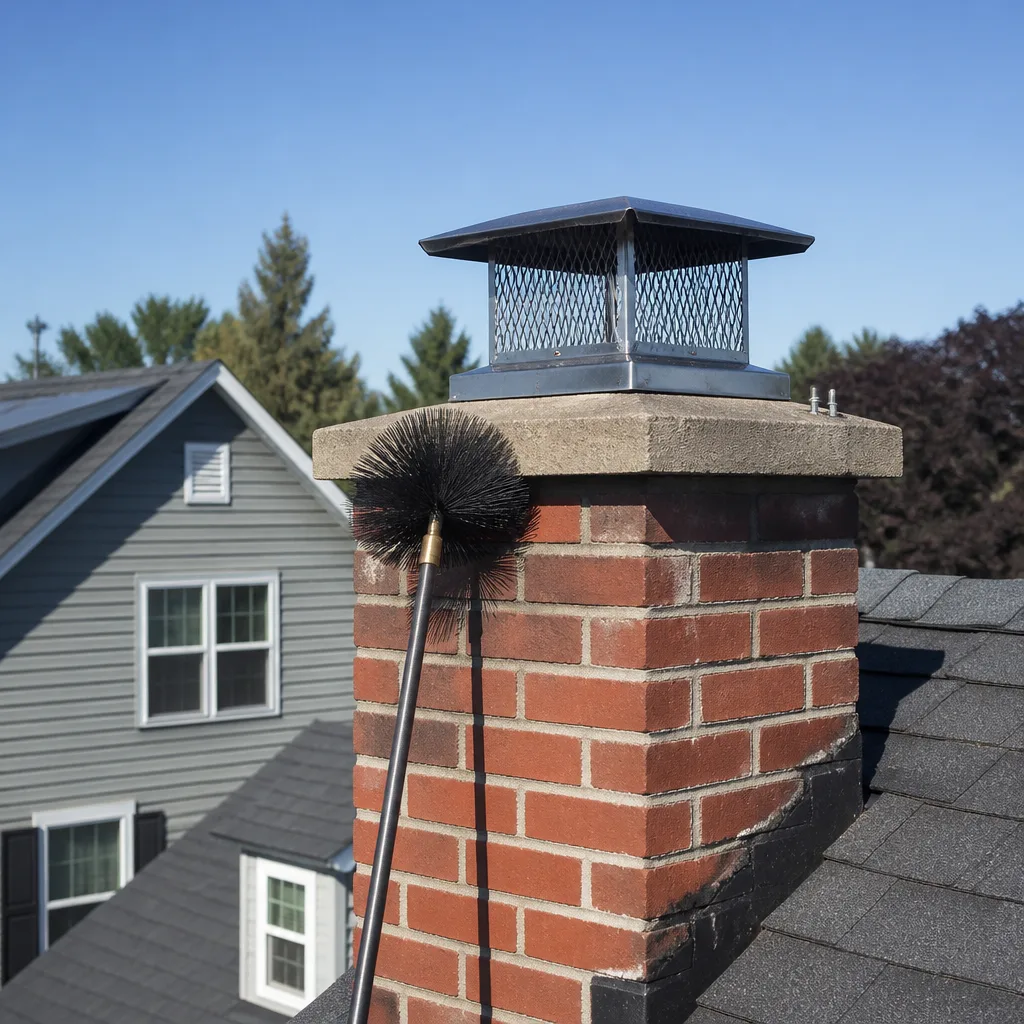 Sweep & inspection
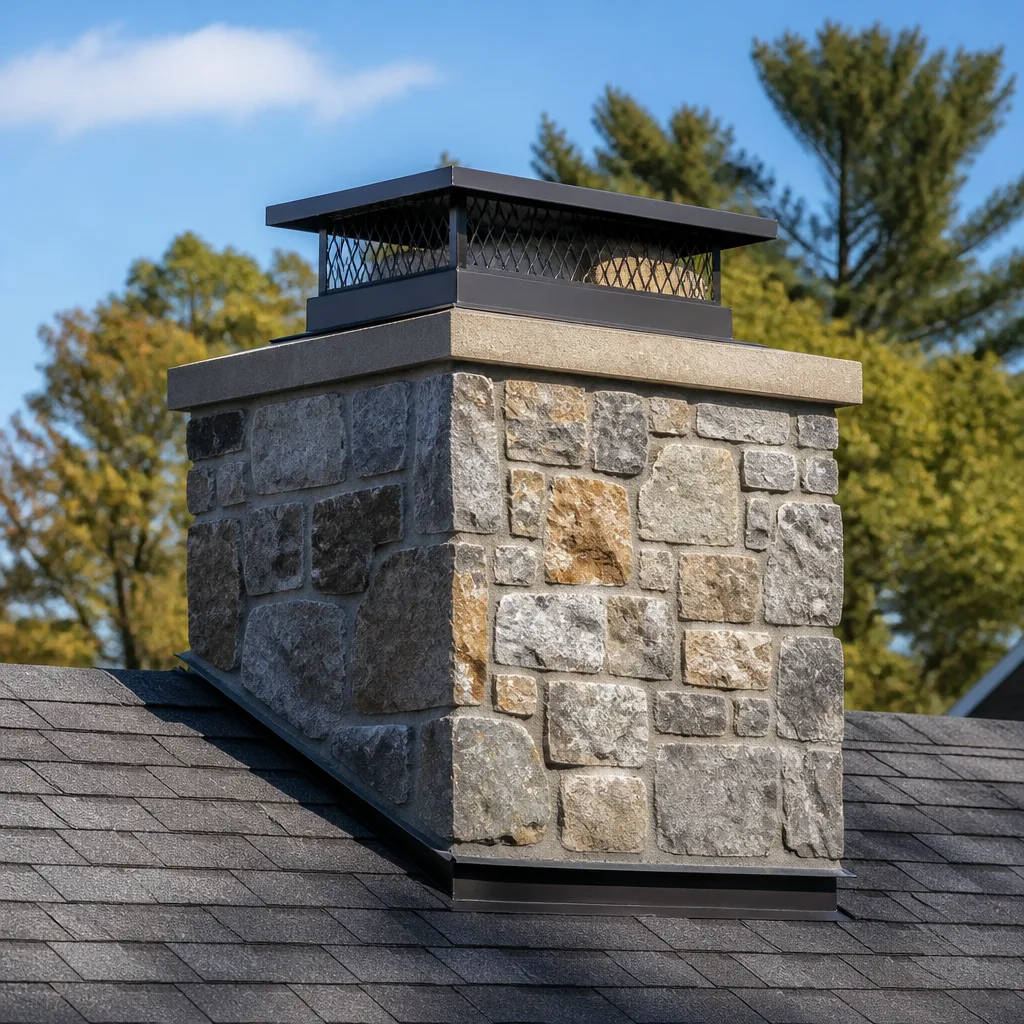 Caps & crowns
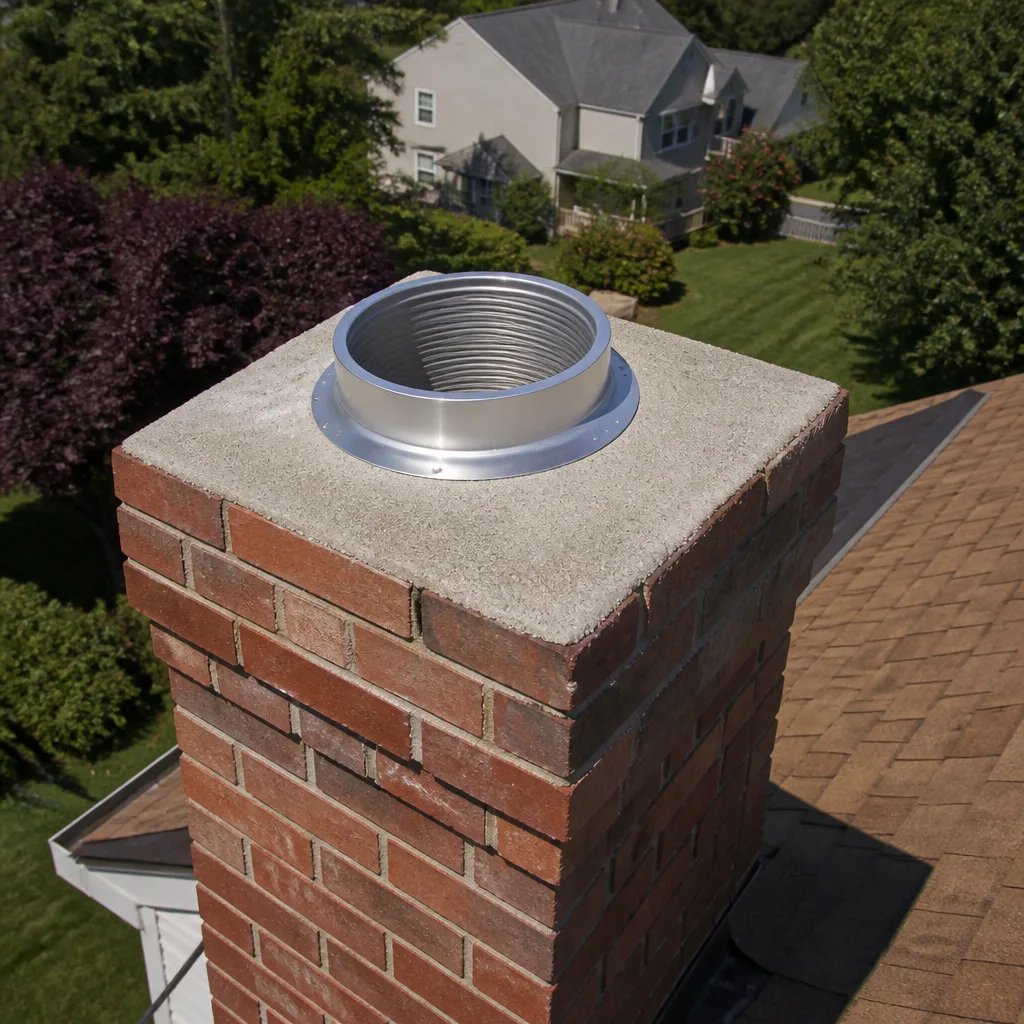 Flue relining
 Masonry repair
 Gas fireplace service
Level 1 sweep and inspection to the NFPA 211 annual standard - flue, crown, cap, and flashing checked and photographed
Chimney sweep logs do not sweep chimneys. They loosen some creosote - which then falls where a brush and vacuum still have to collect it.
Chimney Sweep Maintenance Checklist for East Los Angeles Homeowners
Here’s a number most East Los Angeles homeowners never hear: the National Fire Protection Association reports that roughly one in four home heating fires involves a fireplace or chimney, and the leading cause isn’t faulty installation. It’s simply not cleaning the thing. What makes this worse is that most chimney maintenance advice online reads like it was written for a Vermont farmhouse burning four cords of oak every winter. Your East LA fireplace, burning maybe eight to twelve fires between November and February, needs a fundamentally different standard of care than a primary heat source in New England. This guide—along with our Chimney Sweep Troubleshooting: Common Problems and How to Fix Them—gives you that standard: a month-by-month checklist calibrated for East Los Angeles weather, the specific warning signs you can see from your living room floor, and the three conditions that mean stop using the fireplace today, not next week.
Quick Answer
A proper chimney maintenance checklist for East Los Angeles breaks into three layers: monthly visual checks you can do yourself during burn season, seasonal tasks tied to Southern California’s mild winters and Santa Ana wind patterns, and professional inspection items that require a CSIA-certified sweep once a year. The three conditions that require immediate action are: visible smoke entering the room during use, a strong musty odor coming from the firebox when the fireplace is cold, and any cap or crown damage you can see from ground level with a pair of binoculars.
Styles & brands we work with
Table of Contents
- The East LA Seasonal Maintenance Calendar
- Monthly Visual Inspections You Can Do Yourself
- Warning Signs That Mean Stop Using the Fireplace
- What a Professional Sweep Checks That You Cannot
- Documenting Chimney Condition for Insurance and Repairs
- The Dryer Vent Items That Belong on the Same Checklist
- Common Mistakes to Avoid
- When to Call a Professional
- Frequently Asked Questions
The East LA Seasonal Maintenance Calendar
Most chimney checklists you will find online are built around a four-season template that assumes hard freezes, heavy snowfall, and a burning season that runs from October through April. East Los Angeles does not work that way. Your burning season is shorter and more sporadic. You might light a fire on a cool December evening and not touch the fireplace again until February. Then a cold snap hits and you burn three nights in a row. That irregular pattern means creosote builds differently than it does in a home that burns daily for five months straight.
Here is a month-by-month maintenance calendar that actually fits East LA:
October
This is your pre-season month. Before the first fire, do a daylight inspection of the chimney cap and crown from the ground with binoculars. Look for rust streaks running down the masonry below the cap, which indicate the cap is failing and water is getting behind it. Check the damper operation: it should open fully, close fully, and stay in position without being held. If your damper is warped or rusted shut from disuse over summer, that first fire will push smoke into the room and you will think the chimney is blocked when it is actually a damper that will not open. This is also the month to book your professional Chimney Sweep if you have not had one in the last 12 months. East LA sweeps book heavily in October and early November. Waiting until the first cold evening means waiting several weeks for an appointment.
November through February
This is your active burn season. Do the monthly visual checks described in the next section before your first fire of the month. After each fire, feel the wall around the fireplace for any spot that is warm to the touch. Warmth on the wall above the mantel or on the floor in front of the hearth is not normal and can indicate a gap in the firebox or a deteriorating flue liner. In East LA, where many homes have original masonry from the 1940s and 1950s, firebox mortar joints crack with age and repeated heating-cooling cycles. A warm wall is the earliest sign.
One East LA specific consideration: if you live in the hills, you know the Santa Ana winds arrive without much warning. High winds create negative pressure inside your home and can force a downdraft that sends smoke into the room even when your chimney is clean and your damper is functioning. If this happens during a Santa Ana event, it is usually a wind problem, not a chimney problem. But if it happens on a calm evening, that is a draft reversal issue and needs attention. More on that below.
March through April
This is your shutdown window. Once you have burned your last fire of the season, usually by late March or early April in East LA, let the fireplace cool completely for 48 hours. Then do a post-season check. Look at the firebox floor and walls. Is there more than a thin dusting of ash and soot? Is there any shiny, tar-like residue on the damper or the smoke shelf above it? That residue is third-degree creosote, and it is highly flammable. It will not brush off with a standard chimney brush. It requires a chemical treatment or mechanical removal by a professional. The post-season check tells you whether your burning habits are creating dangerous buildup, and that tells you whether you need to change how you build fires or how often you have the chimney swept.
This is also the best time in East LA to have a sweep done. The weather is mild, the chimney is cold, and you have months before the next burn season to address anything the sweep finds. You can also have the dryer vent checked at the same time, since one truck roll covers both services.
May through September
Your fireplace is dormant, but it is not doing nothing. Summer in East Los Angeles means heat, occasional marine layer humidity, and a long dry spell. Heat accelerates the expansion and contraction that opens hairline cracks in masonry. Humidity from the marine layer can find its way through those cracks and into the flue. And when the Santa Anas kick up in late summer and fall, they blow dust and debris into an uncapped or poorly capped chimney. So your off-season tasks are simple: keep the damper closed except on very dry days when you might open it briefly to vent humidity, and do one visual check of the cap and crown in August. If you see new rust, new cracks, or missing mortar joints, the rainy season will make whatever is wrong worse. Address it before November.
Monthly Visual Inspections You Can Do Yourself
You do not need to be a certified sweep to catch most chimney problems early. You need to know what to look for and when to look for it. These checks take five minutes, require nothing more than a flashlight and a pair of binoculars, and they catch the majority of issues we find during professional inspections in East Los Angeles.
- Check the firebox floor and walls. Shine a flashlight into the firebox. Look for cracked mortar joints, loose or missing firebrick, and any white, chalky deposit on the brick surface. That white deposit is efflorescence, and it means water is moving through the masonry. In an East LA home, the water is usually coming from a failed cap or crown, though it can also come from rain driven into the chimney throat. Efflorescence is not a fire hazard by itself, but it tells you water is getting where it should not be, and repeated wetting destroys mortar over time.
- Check the damper. Open and close the damper. It should move smoothly, stay open on its own, and close with a positive seal. A damper that is stiff, squealing, or rusted in place is a sign that moisture has been sitting in the throat. A damper that will not fully close wastes conditioned air all year long in East LA, where you probably run air conditioning more months than you run heat.
- Check the visible flue. From inside, open the damper and shine the flashlight up into the flue. You will not see much beyond the first few feet, but look for any patch of shiny, tar-like material clinging to the flue wall. That is third-degree creosote. It can appear after just a few fires if the wood is not fully seasoned or if the fires burn cool and smoldery. This is the single most important thing for you to check, because third-degree creosote is what actually catches fire in chimney fires. At Hickory Chimney Sweep home our technicians remove this mechanically and with professional-grade chemical treatments, not a hardware-store brush.
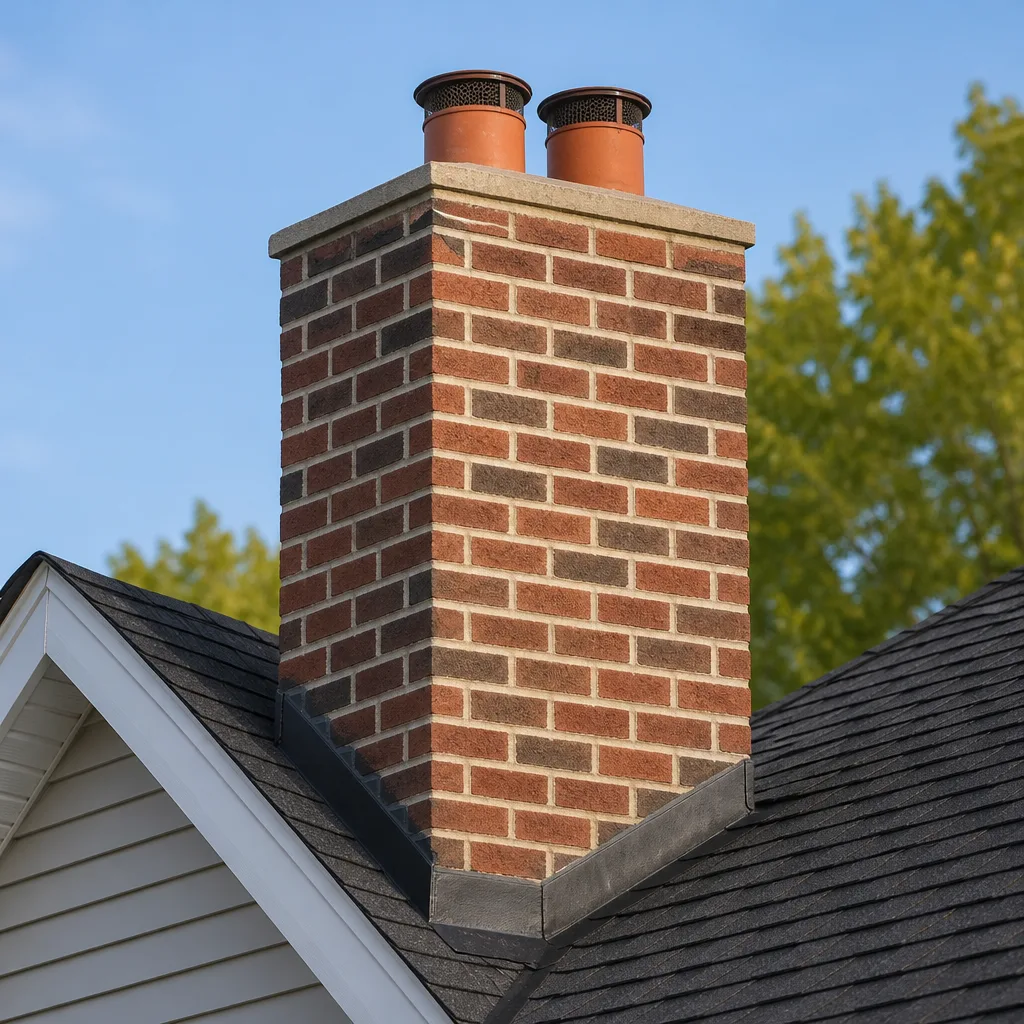
- Check the cap and crown from outside. Walk out to your yard or sidewalk and look at the top of the chimney with binoculars. You are checking four things: rust streaks running down from the cap, a cap that is missing or tilted, a crown with visible cracks or missing chunks, and any plant growth. In East Los Angeles, eucalyptus debris and small branches landing on a damaged crown will root in the cracks and accelerate the damage.
- Check for debris in the throat. After every significant wind event, especially during Santa Ana season, open the damper and shine the light up. Look for twigs, leaves, or paper debris sitting on the smoke shelf. Debris in the throat is a sign that the cap is not doing its job or the damper was left open during a wind event.
One more check that costs nothing and takes thirty seconds: after your fire is well established and burning clean with good draft, step outside and look at the smoke coming from the chimney. Thin, nearly invisible wisp means good combustion. Thick, white smoke that lingers or that you can smell from the yard means incomplete combustion, wet wood, or restricted airflow. If thick smoke is your normal, the flue is telling you it needs attention.
Warning Signs That Mean Stop Using the Fireplace
Most chimney problems can wait until the end of burn season or until your next professional sweep. But there are three conditions that mean stop using the fireplace immediately, not add it to the list for next month. We see all three regularly in East Los Angeles homes, and each one has a different underlying cause and a different repair path.
1. Smoke entering the room during normal use
If smoke comes into the room while the fire is burning and the damper is confirmed fully open, the chimney is not drafting. The causes range from a cold flue that needs a minute to warm up, to a blocked chimney, to a flue that is simply too small or too short for the firebox. In East LA, where daytime temps in December often hit the mid-60s and evening temps drop into the 40s, a cold flue can be stubborn about reversing itself, especially if the chimney is located on an exterior wall. But if the smoke persists after the first twenty minutes of a hot, well-established fire, you have a draft problem that will not fix itself. It could be a nest, a collapsed liner, or a fundamental design flaw. Stop using the fireplace until a certified sweep has looked at it. Continued use puts carbon monoxide and particulates into your living space.
2. A strong musty or campfire odor when the fireplace is cold
When you walk past the fireplace in July and you smell smoke, that is creosote off-gassing, and it means you have significant buildup on the flue walls. It can also mean water has mixed with the creosote, which creates a particularly pungent odor and accelerates liner corrosion. A little smoke smell after an active burn season is common in East LA, especially in older homes where the original masonry is more porous. But a smell you notice from across the room, a smell that gets stronger on humid days, or a smell that persists after you have left the damper open through a couple of dry days is a problem. It means the chute needs mechanical cleaning. Do not burn again until it has been swept. Built-up creosote plus heat equals chimney fire.
3. Rust streaks or visible cracks on the cap and crown
Rust streaks running from the chimney cap down the masonry are not cosmetic. They mean the cap is failing and water is actively penetrating the chimney structure. That water attacks the mortar joints from the inside, accelerates freeze-thaw damage even in East LA’s occasional cold snaps, and will eventually damage the flue liner itself. Cracked crowns are equally serious. The crown is the concrete slab that seals the top of the chimney around the flue. Once it cracks, water has a direct path into the chimney chase. This is exactly the type of damage we repair with HeatShield resurfacing when the liner has started to deteriorate from water exposure. If you can see rust or cracks from the ground, there is more damage you cannot see. Stop burning and get an inspection before the rainy season.
What a Professional Sweep Checks That You Cannot
There is a reason CSIA-certified sweeps exist and it is not because the brushes are heavy. A professional chimney inspection reaches into parts of the flue system that are physically inaccessible to a homeowner with a flashlight. Here is what a proper professional sweep in East Los Angeles is actually checking when they come to your home, and why each item matters.
The liner, from top to bottom
You can see the first few feet of flue from your firebox. You cannot see the middle sections, the top sections, the smoke shelf, or the connection to the cap. A professional uses specialized cameras, not just mirrors and flashlights, to inspect the entire liner surface. They are looking for cracks, separations between flue tiles, spalling (where the clay tile surface is flaking away), and corrosion if the fireplace vents a gas appliance. In East LA, many older homes have unlined chimneys or chimneys with clay tile liners that are well past their service life. A cracked liner lets heat and combustion gases escape into the wall cavity, and that is the condition that turns a contained chimney fire into a house fire.
When a liner is found to be deteriorated, the fix is not an add-on referral. We reline using DuraFlex flexible liner systems, which handle the thermal cycling of an East LA burn season without cracking. For less severe surface deterioration, HeatShield resurfacing restores the inside of the existing flue without a full reline. Both are in-house capabilities. That is the difference between getting a report and getting a repair.
The smoke shelf and damper assembly
The smoke shelf is the flat area just above the damper, and it exists to catch falling debris and prevent downdrafts from blowing smoke into the room. But because it sits flat, it also collects creosote, soot, and the occasional bird that made it past the cap. A professional inspects this area during every sweep and removes what has accumulated. They also test the damper for full range of motion and a proper seal. In our experience in East Los Angeles, the smoke shelf and damper area is where we find most of the surprises: bird nests, dead rodents, years of accumulated creosote that never got cleaned because the previous owner burned sparingly but never swept at all.
The cap, crown, and chase top
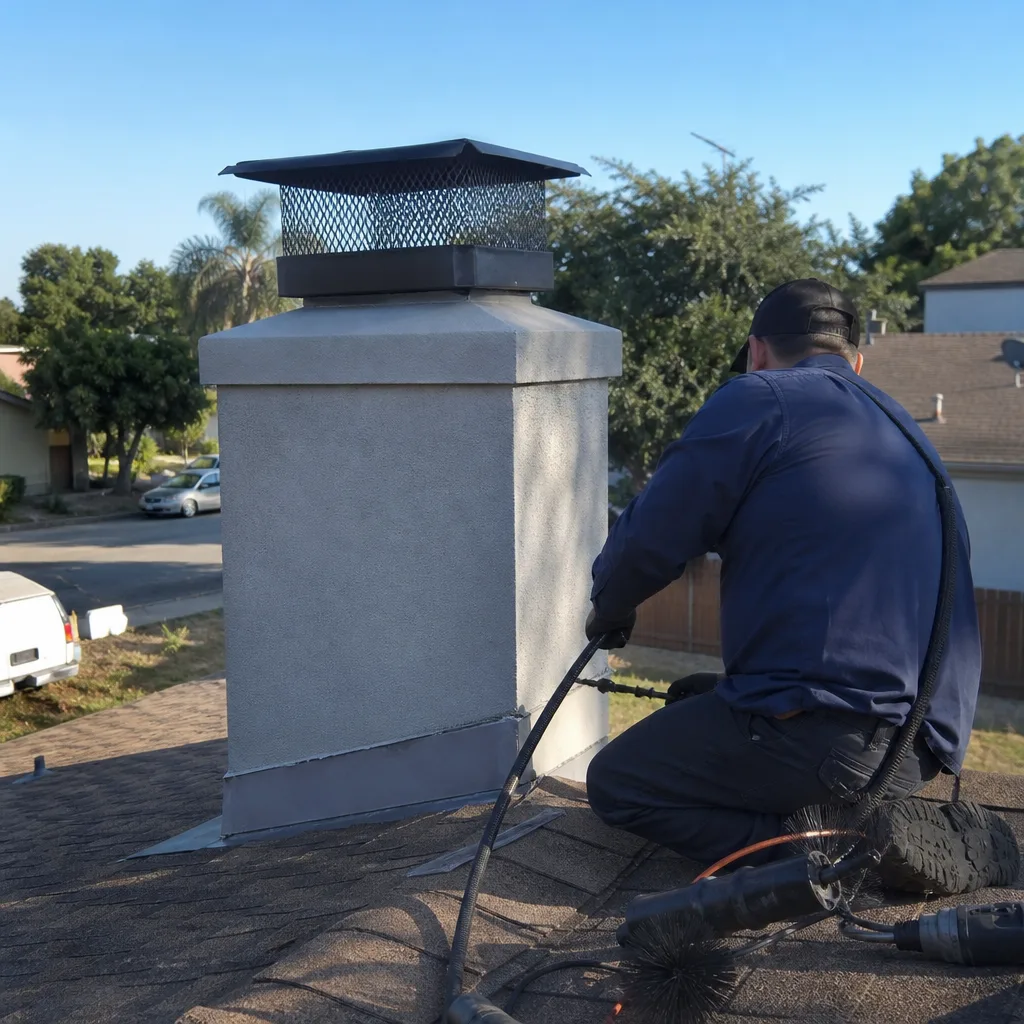
The top of the chimney takes the worst beating: ultraviolet radiation all year, rain during the wet season, salt air if you are near the coast, and the abrasive dust of Santa Ana winds. A professional checks the cap for rust and mesh integrity, the crown for cracks and proper slope, and the flashings where the chimney meets the roof. In East Los Angeles, roof flashings on older homes frequently fail silently, letting water run down into the attic and around the chimney chase without ever showing a stain on the ceiling until the damage is advanced.
This full inspection is why we say a professional sweep is not just a cleaning. The cleaning is important, but the inspection is what actually protects your home. Annual inspection is the recommendation from both the National Fire Protection Association and the Chimney Safety Institute of America, regardless of how often you burn.
Documenting Chimney Condition for Insurance and Repairs
East Los Angeles sits in earthquake country, and even a moderate shake can move a chimney enough to open mortar joints, crack the crown, or shift the entire structure off its footing. When that happens, your insurance claim or your repair estimate depends on documentation. Here is how to document your chimney like a professional, starting today.
Take baseline photos now
The day after your next professional sweep, take a set of dated photos of the entire chimney system. Exterior shots from all four sides, including close-ups of the cap and crown. Interior shots of the firebox, the damper, and as far up the flue as your camera can reach clearly. Store them in a dedicated folder. These photos establish a baseline. If an earthquake or storm event damages the chimney later, you can show what it looked like before.
Document anything you find during your monthly checks
If you see efflorescence, a rust streak, or a crack during your monthly visual, photograph it with the date visible. Use the same camera angle every time if possible. A series of photos taken over several months is far more useful to a contractor than a single shot, because it shows whether the damage is stable or progressing. That progression information changes the urgency of the repair and can affect what your insurance will cover. Progressive damage from water intrusion is often excluded from standard homeowner policies, while sudden damage from a named event is covered. Your photo record helps establish which category your damage falls into.
Keep a burn log
A simple note on your phone with the date, approximately how many hours you burned, what type of wood, and any unusual observations. This takes thirty seconds after each fire. If you ever have a chimney fire, your burn log tells the sweep and your insurance adjuster exactly how much creosote load the flue should have accumulated, which helps establish cause and responsibility. It is also genuinely useful for your own planning: after a season of burning you will see exactly how much use your fireplace got, and that tells you whether you can stretch to eighteen months between sweeps or need to stay on a strict twelve-month schedule.
The Dryer Vent Items That Belong on the Same Checklist
You may be wondering what a dryer vent has to do with a chimney checklist. Here is the connection: chimneys and dryer vents are the two leading appliance-related fire risks in residential homes, and they share the same failure mechanism. Both accumulate flammable residue from incomplete combustion. In the chimney, that residue is creosote. In the dryer vent, it is lint. Both ignite under the same conditions: enough flammable material, enough heat, and restricted airflow. So it makes sense to inspect them together, which is why Dryer Vent Cleaning in South San Gabriel is a core service for us, not an add-on.
Here are the dryer vent items that belong on your monthly visual checklist, right alongside the chimney items:
- Lint trap airflow test. After your dryer has run a full cycle, remove the lint trap and hold it up to a light. If you cannot see light through the mesh even after cleaning it, lint is embedded in the screen. A full-capacity lint trap restricts airflow and makes the dryer work harder. Clean the trap thoroughly after every load.
- Cycle-time baseline. Note how long a normal load takes to dry when you first move into your home or after a professional vent cleaning. If a load that took 45 minutes now takes 65 minutes, the vent is accumulating lint and airflow is dropping. This is a slow change that most people do not notice until a professional points it out.
- Exterior cap check. Walk outside to where the dryer vents. Confirm the cap is present, the flap opens when the dryer runs, and there is no lint accumulation around the opening. A stuck flap or a visible plug of lint at the cap means the entire run needs professional cleaning.
- Check for a full lint trap after every load. If you empty a visibly full lint trap every single time you run the dryer, you are generating more lint than the system can handle, which usually means the vent run itself is partially obstructed and backing up.
For the chimney-plus-dryer-vent combination, one call covers both. Schedule them together once a year in East Los Angeles and you have addressed the two leading sources of appliance fire risk in your home with a single service visit.
Common Mistakes to Avoid
- Using a generic four-season checklist. A checklist that says “schedule a sweep every fall” without accounting for East Los Angeles’s short, sporadic burn season leads to either neglected chimneys or unnecessary cleaning. Calibrate to how often you actually burn, and keep the burn log to verify.
- Burning wood that is not fully seasoned. In East LA, firewood often comes from local tree services, and it is frequently green when sold. Green or partially seasoned wood burns cool and smoldery, which produces significantly more creosote than properly seasoned wood. Wood should be split, stacked, and dried for at least six months. If your wood hisses or you can see moisture bubbling from the ends, it is not ready.
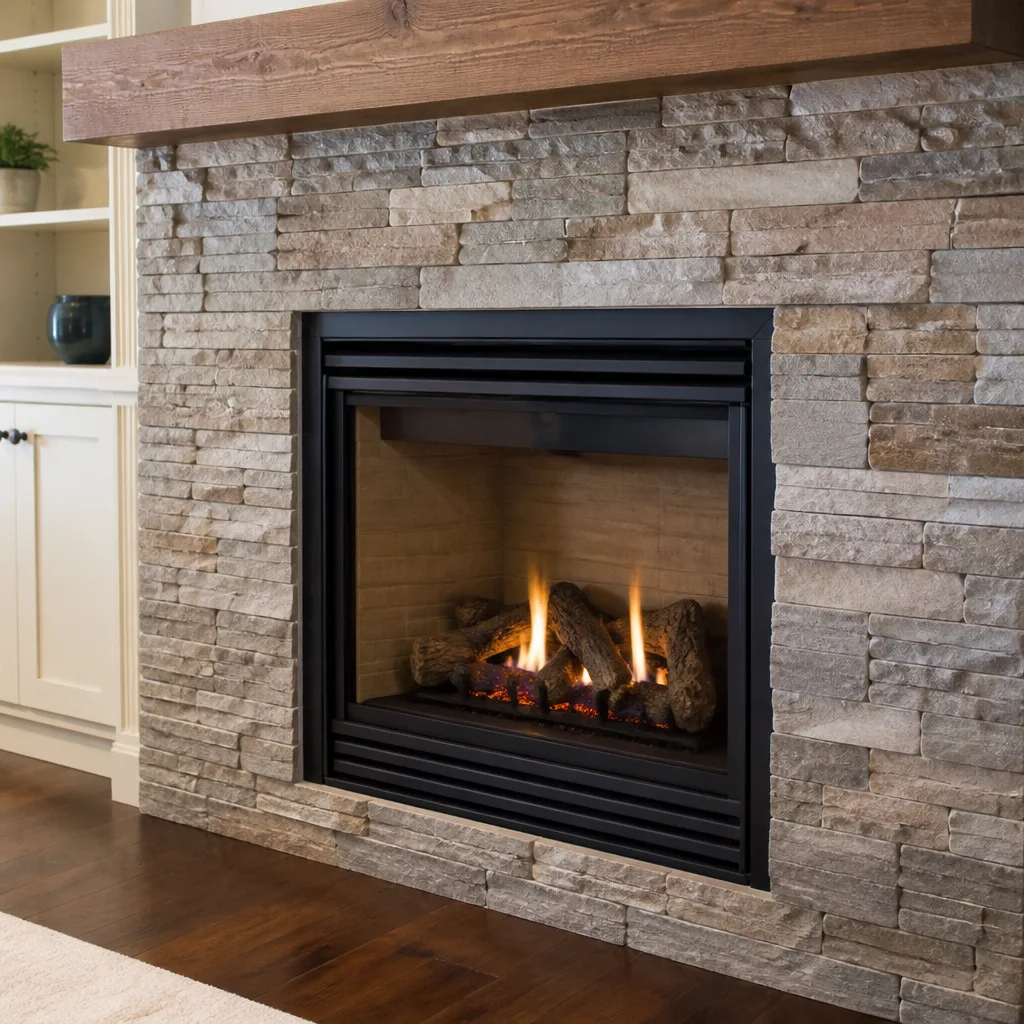
- Assuming a gas fireplace never needs service. Gas fireplaces do not produce creosote, but they still vent combustion gases, and the venting system accumulates dust, debris, and sometimes bird nests. Gas fireplace venting should be inspected annually too, and the burners and controls need periodic service. A gas fireplace that has not been used in months can fill with debris blown in through a faulty cap.
- Ignoring a musty odor because the fireplace is not in use. That off-season smell means moisture and creosote are interacting inside the flue, and the problem is getting worse every humid month. The longer it goes unaddressed, the more liner damage occurs. Off-season is actually the best time in East LA to have it addressed.
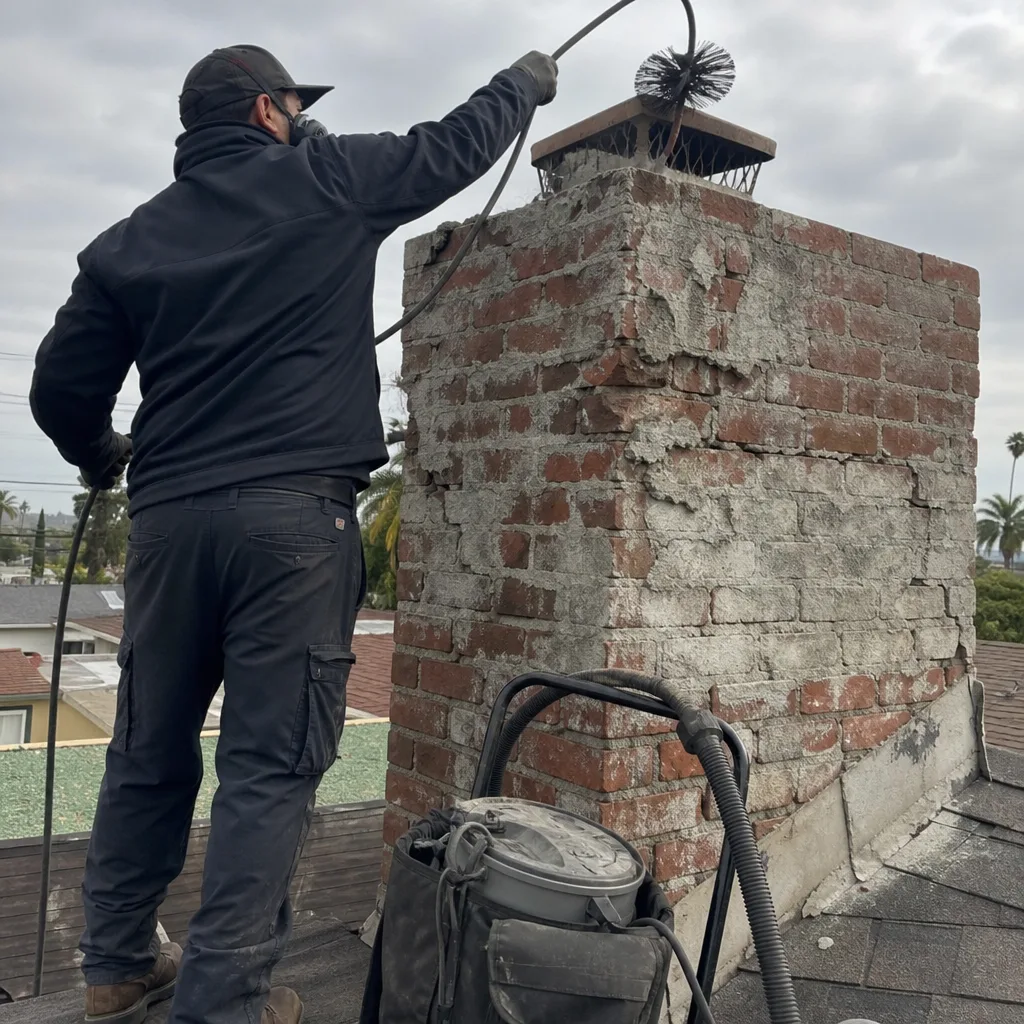
- Cleaning the chimney with a store-bought brush and rod kit. Without professional training and the right equipment, you cannot visually verify that you have removed all the creosote from the smoke shelf, the damper assembly, and the upper flue. You will dislodge some soot and leave the dangerous stuff behind, while convincing yourself the chimney is clean. That is exactly how false confidence gets created.
- Delaying repairs because the fireplace still works. A chimney with a cracked crown or rusted cap still draws and still burns. It is also actively taking on water that is causing structural damage you cannot see. The repair cost goes up the longer you wait. In East LA, where many homes are 60 to 80 years old, deferred chimney maintenance is usually the difference between a simple cap replacement and a full reline with a DuraFlex system.
When to Call a Professional
You should schedule a professional inspection and sweep at least once per year if you burn at all, even if you only burn a handful of times each season. You should also call a professional, not add to your list, if you see smoke entering the room during a well-established fire, if you smell a strong musty odor from the firebox when the chimney is cold, if you see rust streaks or cracks on the cap or crown, if you find evidence of animal activity (nesting material, droppings, scratching sounds), or if you experience a chimney fire even if it appears to have self-extinguished. A chimney fire can damage the liner invisibly, and the next fire you build could be the one that finds the gap. For dryer vents, call when cycle times have increased noticeably, when the exterior cap is not opening properly, or when it has been more than a year since the last professional vent cleaning. Hickory Chimney Sweep offers free estimates in East Los Angeles. Our Chimney Sweep in South San Gabriel service area covers the full East LA region. Call (855) 554-2841 to schedule.
Frequently Asked Questions
The National Fire Protection Association recommends an annual inspection and sweeping as needed for all chimneys, fireplaces, and vents, regardless of climate. In East Los Angeles, where most homeowners burn fewer than 25 fires per season, a professional sweep every 12 months is usually sufficient. If you burn more heavily or burn wood that is not fully seasoned, you may need sweeping more frequently. Your burn log will tell you. Call (855) 554-2841 for an assessment of your specific situation.
A standard chimney sweep and inspection in East Los Angeles typically runs between $180 and $350 depending on the condition of the flue, the height of the chimney, and whether any additional services like cap replacement or liner repair are needed. The final price depends on what the inspection finds. Estimates are free. Call (855) 554-2841 for a specific quote.
That white substance is efflorescence, which is salt and mineral deposits left behind when water evaporates from the masonry. It means water is moving through the chimney structure, usually because of a failed cap, a cracked crown, or deteriorating mortar joints. Efflorescence itself is not harmful, but the water movement causing it will continue to damage the chimney until the water entry point is repaired.
You can physically run a brush up the flue with a store-bought kit, but you cannot verify that you have removed the creosote from the areas that matter most: the smoke shelf, the damper assembly, and the upper third of the flue. Those are the areas where East Los Angeles homes build up the most dangerous deposits. Plus, working on a roof or reaching down into a chimney has real risks. We recommend leaving this to a professional with the right equipment and training.
A faint smoke smell after a burn season is common, especially in older East Los Angeles homes with porous masonry. A strong, room-filling odor that persists through dry weather is not normal. It indicates significant creosote buildup on the flue walls, often compounded by moisture. Have the flue professionally swept before you burn again, and address any water entry issues the sweep identifies.
Both chimneys and dryer vents fail through the same mechanism: flammable residue accumulating on the walls while airflow drops. A blocked dryer vent is a leading cause of residential fires in the United States, which is why we recommend adding dryer vent inspection to your annual chimney maintenance. Chimney Repair in South San Gabriel and dryer vent cleaning are both part of the annual fire-safety checklist. One call to (855) 554-2841 covers both.
The Bottom Line
The right chimney maintenance checklist for East Los Angeles is shorter than the generic checklists you will find online, and that is the point. You need to do the monthly visual checks during burn season, address the three stop-using-the-fireplace warning signs immediately, document your chimney condition with dated photos and a burn log, and have a professional sweep and inspection once per year. Add the dryer vent items to the same list and you have covered the two leading appliance fire risks in your home. Clean it. Repair it. Protect it. That is the whole checklist, and it is enough.
Written by the team at Hickory Chimney Sweep, serving East Los Angeles since 2013.
Need a professional chimney sweep or inspection in East Los Angeles? Call Hickory Chimney Sweep at (855) 554-2841 for a free estimate.
See the difference
 Before
 After
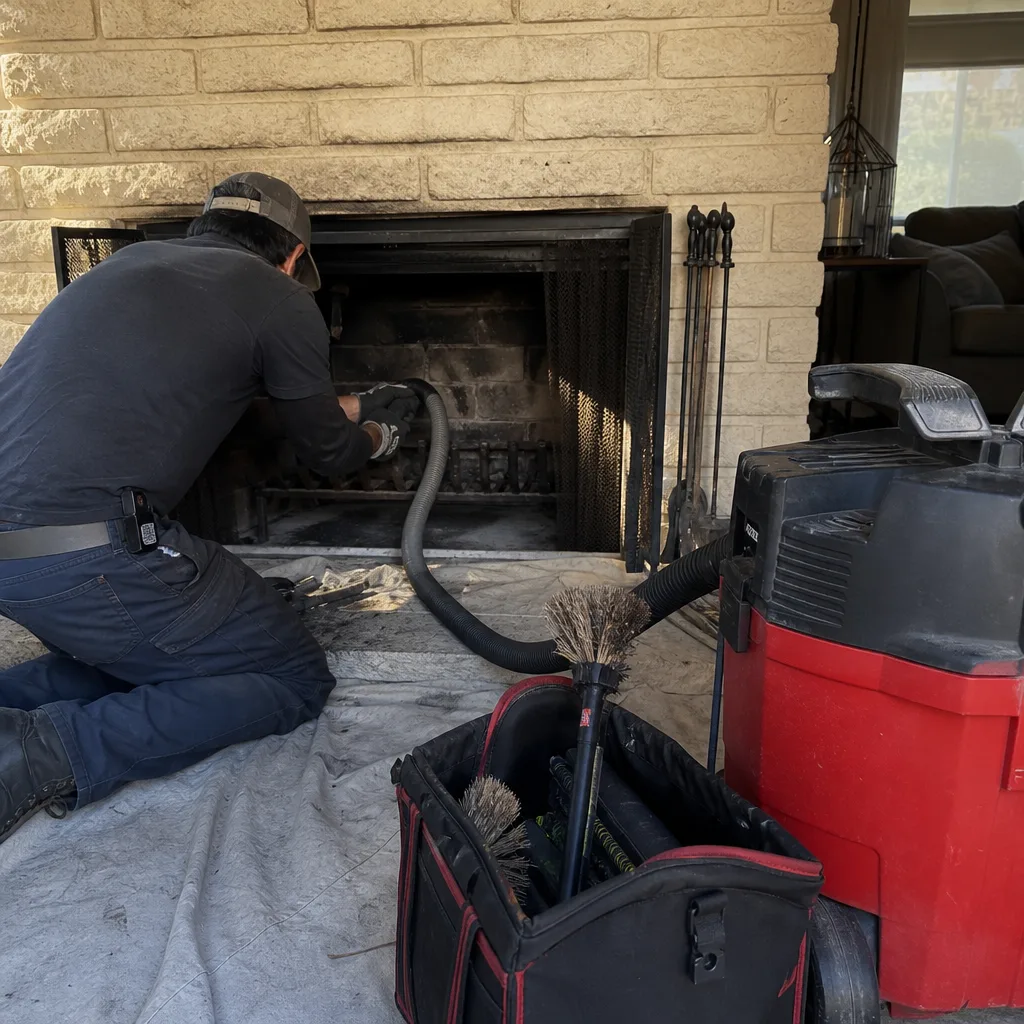 Before
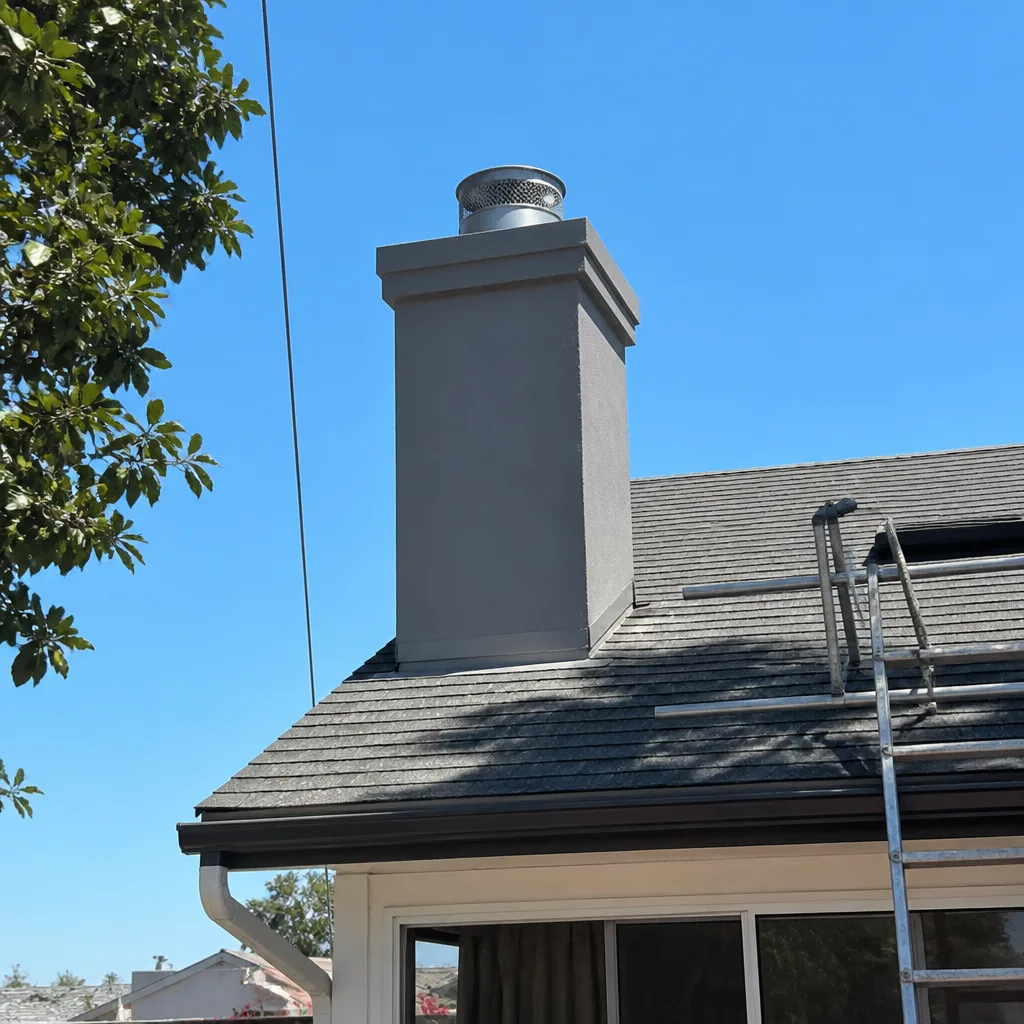 After
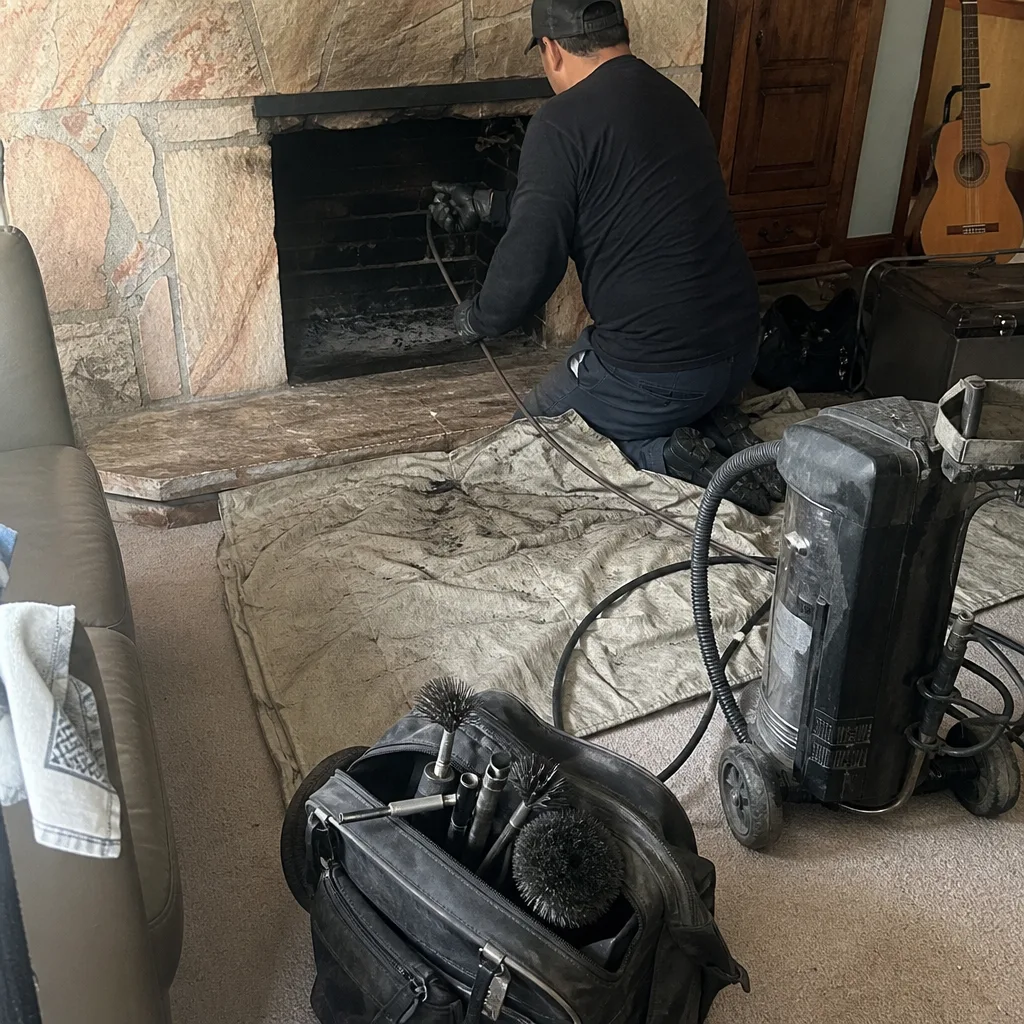 Before
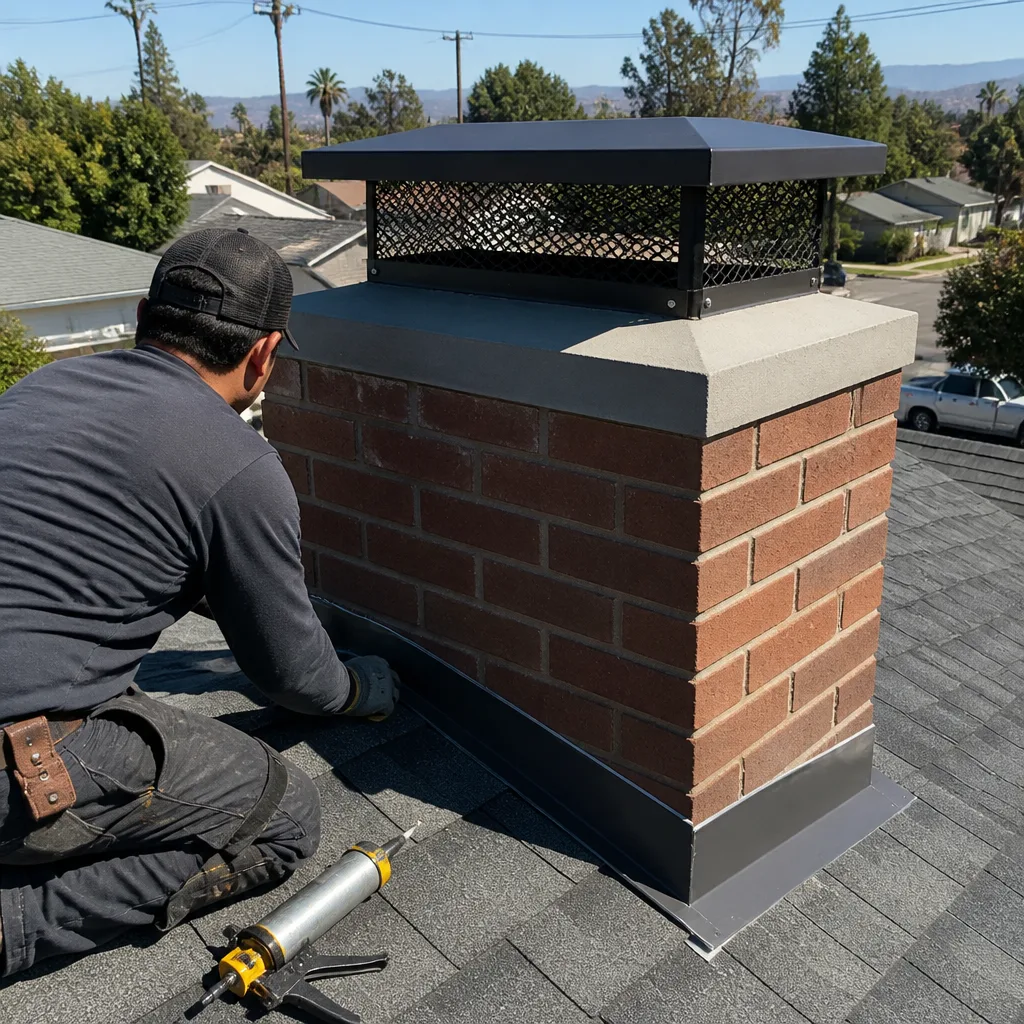 After